DIY · Updated May 2026 · 12 min read · EcoHome Intelligence
How to Wire a Motion Sensor Light Switch (3-Wire Diagram)
Wire a 3-wire motion sensor light switch in 20 minutes with a clear LINE / LOAD / Ground diagram, breaker-safe install steps, and the exact connections that keep your switch legal and reliable in 2026.
In This Guide
Why Motion Sensor Switches Save Money
A motion sensor light switch automatically turns lights off when no one is in the room. In high-traffic areas like hallways, bathrooms, closets, and garages, these switches eliminate the "someone left the light on again" problem.
Here is the math: a single 60-watt bulb left on for 12 hours per day costs about $35 per year at 13 cents per kWh. A motion sensor switch costs $20–$50 and typically pays for itself in 6–18 months depending on how often the light was being left on. In a home with 3–4 frequently forgotten lights, the annual savings can reach $100–$140.
Beyond the savings, motion sensor switches add convenience. You walk into a dark laundry room with your hands full and the light turns on automatically. You leave and it turns off 30 seconds later. No switches to flip, no one to remind.
Want the full home energy audit?
Download our free checklist to find every source of energy waste in your home — from lighting to insulation to phantom loads.
Get the Free Checklist3-Wire Motion Sensor Switch Diagram: LINE, LOAD, Ground
Standard single-pole wiring:
Breaker hot  → LINE terminal
Light fixture → LOAD terminal
Bare copper   → GROUND terminal
Neutral bundle stays tied together unless your specific switch requires neutral.
If your box has only two insulated wires and no ground, stop and verify the circuit before buying a neutral-required sensor. For lighting savings context, compare this project with LED bulb savings and motion sensors vs smart bulbs.
What You Need
Before you start, gather these tools and materials. The whole job takes about 20 minutes once you have everything ready.
- Motion sensor light switch (see recommendations below)
- Non-contact voltage tester ($10–$15, essential for safety)
- Flathead and Phillips screwdrivers
- Wire strippers (if wire ends are damaged)
- Needle-nose pliers
- Electrical tape
- Wire nuts (usually included with the new switch)
Safety Warning: If your switch box does not have a bare copper ground wire, or if you see aluminum wiring (silver-colored, not copper), stop and call an electrician. This guide covers standard modern residential wiring only.
Step 1: Turn Off Power and Test
1Find your breaker panel. Locate the breaker that controls the light switch you are replacing. It is often labeled "hallway," "bathroom," or "bedroom." If you are unsure, turn off breakers one at a time until the light controlled by the switch goes out.
2Test for live voltage. Remove the wall plate by unscrewing the two screws. Hold your non-contact voltage tester against the screw terminals on the side of the switch. The tester should not beep or light up. If it does, you have the wrong breaker — go back to the panel and keep trying.
Step 2: Remove the Old Switch
3Document the wiring. Before disconnecting anything, take a clear photo of how the wires are connected to the old switch. This is your reference if you get confused later.
4Disconnect the old switch. The old switch has two screws on the side (sometimes three if there is a ground screw). Use your screwdriver to loosen the screws and pull the wires free. If the wires are wrapped around the screws, you may need to straighten them with pliers.
Step 3: Identify Your Wires
Most residential light switches use one of two wiring configurations. Look at the wires coming out of your electrical box:
Single-pole switch (most common): You will see two black (or red) wires connected to the old switch, plus one bare copper ground wire. One of the black wires is the "hot" wire carrying power from the breaker. The other goes to the light fixture. In a standard single-pole installation, both black wires are interchangeable — the switch simply breaks the circuit.
Three-way switch (two switches control the same light): You will see three wires connected to the old switch (not counting ground), often with one odd-colored screw (usually black or brass). Three-way switches are more complex. If your old switch has three wire connections, buy a motion sensor switch specifically rated for three-way circuits and follow those instructions instead.
Step 4: Connect and Wire the Motion Sensor Switch
5Connect the wires. Most motion sensor switches have labeled terminals: LINE (power in), LOAD (power out to light), and GROUND. For a single-pole installation:
- Connect the black wire from the breaker (hot) to the LINE terminal
- Connect the black wire going to the light to the LOAD terminal
- Connect the bare copper ground wire to the GROUND terminal (or green screw)
6Secure the connections. Tighten the terminal screws firmly so the wires cannot pull out. Give each wire a gentle tug to confirm it is secure. Tuck the wires neatly into the box so nothing is pinched when you push the switch back in.
7Mount the switch. Push the switch into the electrical box and secure it with the two mounting screws. Do not overtighten — the switch should be flush with the wall. Attach the new wall plate.
Step 5: Test and Adjust Settings
8Restore power and test. Turn the breaker back on. Walk into the room. The light should turn on automatically within a few seconds of detecting motion. Leave the room and wait — most switches turn off after 1–30 minutes depending on the model.
9Adjust sensitivity and timeout. Most motion sensor switches have small dials on the side or back. One dial controls sensitivity (how far away it detects motion). The other controls timeout (how long the light stays on after motion stops). Start with medium sensitivity and a 5-minute timeout, then adjust based on your needs.
Product Recommendations: Budget / Performance / Eco-Premium
TOPGREENER PIR Motion Sensor Switch
BudgetA reliable single-pole motion sensor switch with adjustable sensitivity and timeout. Supports LED, CFL, and incandescent bulbs up to 500W. The vacancy mode option lets you manually turn lights on but auto-turns them off when you leave — perfect for kids' rooms.
Payback: 4–8 months
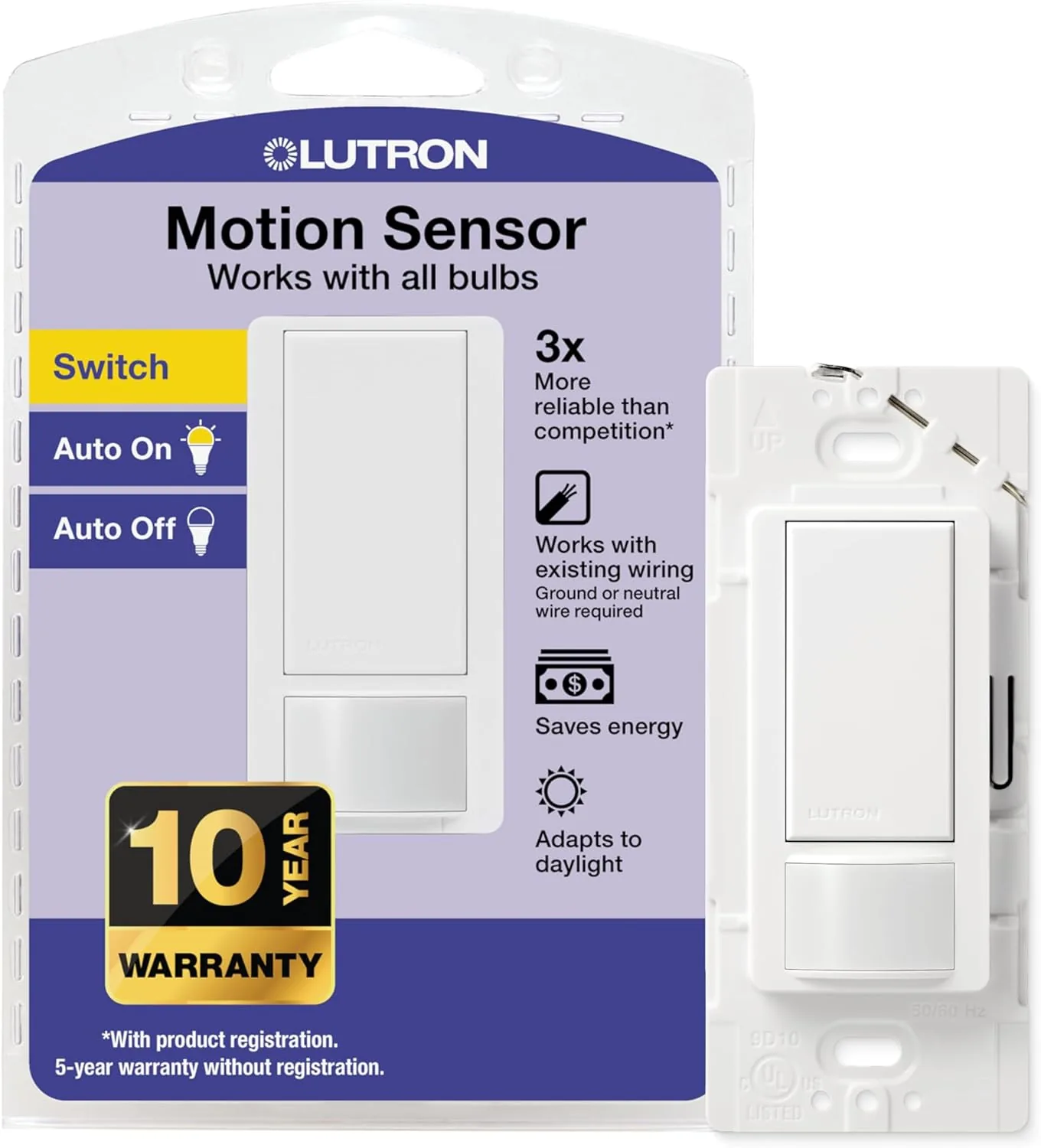
Lutron Maestro Motion Sensor Switch
PerformanceThe industry standard for motion sensing. Advanced XCT sensing technology detects fine motion (like typing at a desk) so lights don't turn off while you are still in the room. Adjustable timeout from 1 to 30 minutes. Works with all bulb types including LEDs and dimmable fixtures.
Payback: 6–12 months
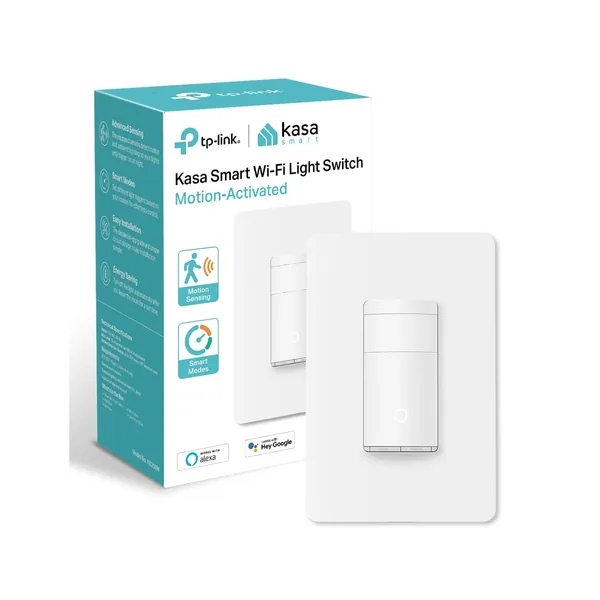
Leviton Decora Smart Motion Switch
Eco-PremiumA Wi-Fi connected motion switch that integrates with Alexa, Google Home, and Apple HomeKit. Control lights remotely, set schedules, and get energy usage reports. The motion sensor is built-in and adjustable, and the switch doubles as a smart outlet controller for your whole-home energy management system.
Payback: 12–18 months
Frequently Asked Questions
Do motion sensor switches work with LED bulbs?
Most modern motion sensor switches work with LEDs, but check the packaging for minimum wattage requirements. Some older or very cheap switches need a minimum load (often 40 watts) and will flicker or fail to turn off with low-wattage LED bulbs. Look for switches specifically labeled "LED compatible."
How do you wire a motion sensor light switch?
For a standard single-pole installation, connect the incoming hot wire to LINE, the wire going to the light fixture to LOAD, and the bare copper wire to GROUND. If your old switch has three active wire connections instead of two, you likely have a three-way setup and need a motion sensor switch designed for three-way wiring.
How do you program or set a motion sensor light switch?
Most models have small controls for sensitivity and timeout. Start with medium sensitivity and a 5-minute timeout. If the light shuts off while you are still in the room, raise sensitivity or extend the timeout. If it turns on too easily from hallway traffic, lower sensitivity slightly.
What if the switch box does not have a ground wire?
If your home was built before the 1960s, you may have ungrounded wiring (only two wires: black and white, no bare copper). Do not install a motion sensor switch without a ground connection — it is a safety hazard. Call an electrician to update the wiring, or use a battery-powered motion sensor light fixture instead.
Will the lights turn off while I am in the room?
If the lights turn off while you are still in the room, the sensitivity is too low or the timeout is too short. High-quality switches like the Lutron Maestro use "fine motion detection" that senses small movements like typing or reading. Budget switches may require larger arm movements to stay on. Adjust the sensitivity dial or buy a switch with better detection range.
Can I install a motion sensor switch in a bathroom?
Yes, but humidity can affect some sensors over time. Make sure the switch is installed outside the shower spray zone (standard electrical code applies). For bathrooms, choose a switch with adjustable timeout so the fan can keep running after you leave. You may need a separate switch or a combo humidity/motion sensor for the fan.
Stop paying for lights no one is using.
Get the full room-by-room energy audit checklist and find every source of waste in your home.
Get the Free ChecklistProducts Mentioned in This Guide
We may earn a commission if you buy through these links, at no extra cost to you. Products are chosen on published specifications; we do not test them in-house (how we choose).
Never waste electricity on empty rooms
Smart motion + scheduling
