EcoGuide · HVAC Calibration · Updated 2026-10-03 · 1,600 words
Why Is My Upstairs So Hot? How to Cool a Second Floor Without Replacing Ductwork
The Short Answer
Three things stack up against a second floor. Trane lists them: hot air rises while cold air sinks; the roof absorbs heat from the sun, which seeps into the attic and then the top floor; and ducts that are old, badly installed or leaky struggle to deliver cool air evenly. Lennox adds a fourth: with one thermostat you have a single-zone system, so the air conditioner stops when the downstairs is comfortable.
Work through the fixes in order of cost. Most homes get a real improvement from the free ones and from the attic, before any equipment is bought.
Step 1: The Free Fixes
- Run the fan continuously. Trane: switch the fan from “auto” to “on” in the summer so the blower runs constantly and mixes the air through the house. American Standard and Lennox say the same.
- Change the filter. Trane says every 30 to 90 days; a dirty filter restricts the flow of cool air. The Department of Energy puts the energy cost of a clogged filter at 5% to 15% of the air conditioner’s consumption.
- Look for seasonal dampers. Some duct systems have a lever on the main ducts in the basement or attic, sometimes marked “Summer” and “Winter”. Set for summer, it sends more air upstairs.
- Block the sun. The Department of Energy’s advice for summer is to keep the window coverings closed during the day on the sunny side.
- Use ceiling fans upstairs. The Department of Energy says a ceiling fan lets you raise the thermostat setting about 4°F with no reduction in comfort. Run it counterclockwise in summer and turn it off when you leave the room; a fan cools people, not rooms.
- Make sure nothing blocks the supply and return vents upstairs.
Do Not Close the Downstairs Vents
It is the first thing most people try, and manufacturers disagree with it. Trane: we don’t recommend closing vents downstairs to cool the upstairs, because it restricts airflow, makes the system work harder and can freeze the evaporator coil. Lennox says the same about closing or partially closing them.
The research backs them. A Lawrence Berkeley National Laboratory study found that closing registers led to increased energy use in a typical house, mostly because the higher duct pressure increased duct leakage, and that closing more than 60% of registers raised safety concerns.
One manufacturer, American Standard, does suggest partially closing downstairs vents. Given the disagreement, treat it as a small adjustment at most, never a full closure. The same caution applies to motorized “smart vents”: they work by closing registers, and we found no manufacturer or government source that recommends them.
Step 2: The Attic
The heat coming through the ceiling is usually the biggest part of the problem, and it is the part you can fix without touching the air conditioner.
- Insulation and air sealing first. ENERGY STAR recommends R49 to R60 for an uninsulated attic in most of the country (R30 in the hottest zone). If your insulation is level with or below the joists, you need more. See what attic air sealing should cost.
- Ducts in the attic. ENERGY STAR says a typical house loses about 20 to 30 percent of the air that moves through the duct system to leaks, and lists rooms that are hard to cool and ducts in an attic as warning signs. Seal accessible joints with mastic or metal tape, then insulate the ducts. The Department of Energy warns against ordinary cloth-backed duct tape: it tends to fail quickly.
- A radiant barrier, in a hot climate. The Department of Energy says radiant barriers can reduce cooling costs 5% to 10% when used in a warm, sunny climate, and are most effective when the cooling ducts are in the attic. In cool climates, more insulation is usually the better buy, and the Building America Solution Center notes that above R-30 of attic insulation there is very little heat flow to reduce. Install it under the roof rafters with the foil facing down; DOE says not to lay it on top of the attic floor insulation, where dust dulls it.
- Skip the powered attic fan. ENERGY STAR warns that if the attic is not well sealed from the house, attic fans will suck cool conditioned air up out of the house and into the attic.
We may earn a commission if you buy through these links, at no extra cost to you. Products are chosen on published specifications; we do not test them in-house (how we choose).
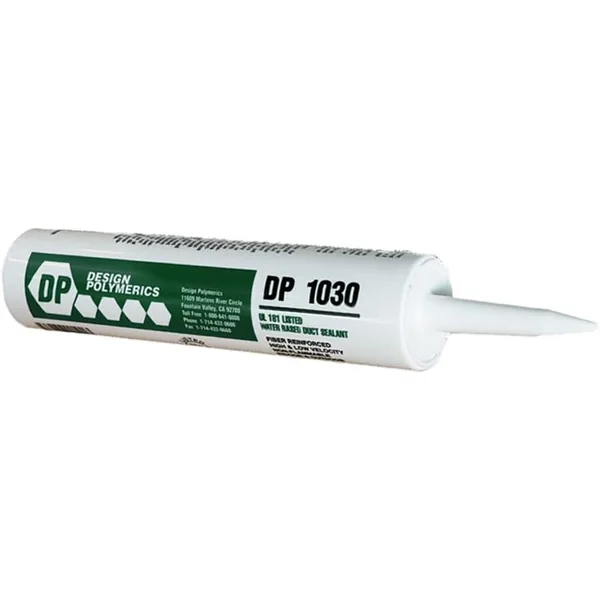
Speedi-Products Duct Mastic Sealant
Brush-on sealant for duct joints and seams.
Check price on Amazon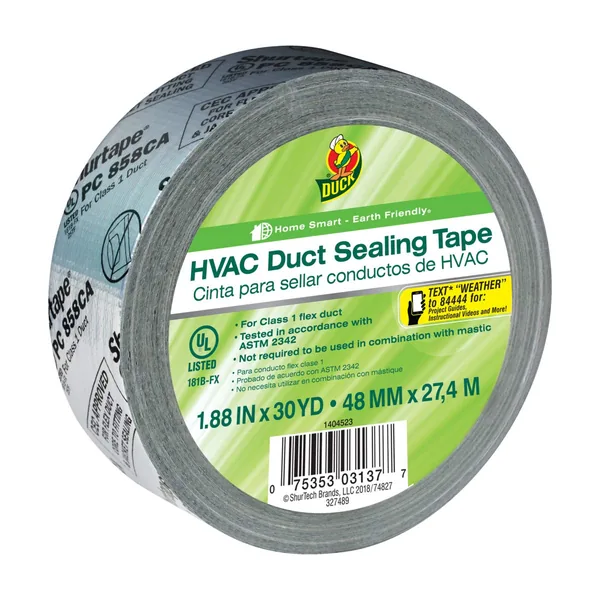
Duck Brand HVAC Duct Sealing Tape
Tape made for sealing HVAC duct seams. ENERGY STAR says to use mastic or metal tape, never ordinary cloth duct tape.
Check price on Amazon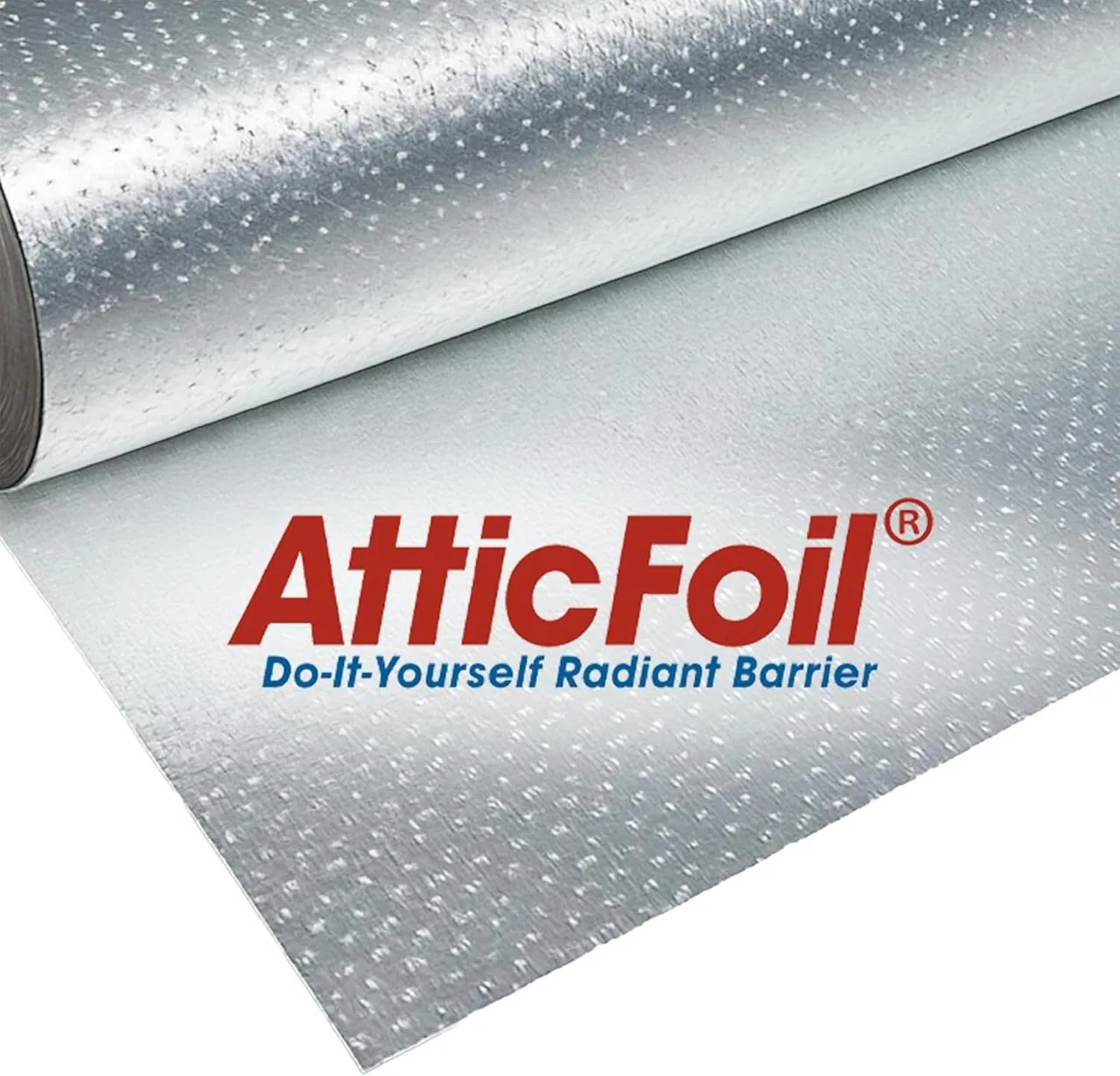
AtticFoil Radiant Barrier (48 in, 1000 sq ft)
Foil radiant barrier for stapling under the rafters. Worth it mainly in hot, sunny climates.
Check price on AmazonStep 3: Flush the Heat Out at Night
Where evenings are cool and dry, a whole-house fan pulls outdoor air in through open windows and pushes the day’s heat out through the attic. A Department of Energy Building America guide rates this kind of ventilation cooling at about 25 Btu per watt-hour, against around 14 for an air conditioner. Its rules:
- Open windows first. A whole-house fan should never be operated without opening of windows. Running one in a closed house can backdraft gas appliances.
- Enough attic venting: one square foot of vent area for each 750 cfm of fan capacity.
- Not for humid climates. The guide does not recommend ventilation cooling where summer night air is commonly more humid than you want indoors.
- Expect noise from most models, and cover or seal the fan in winter.
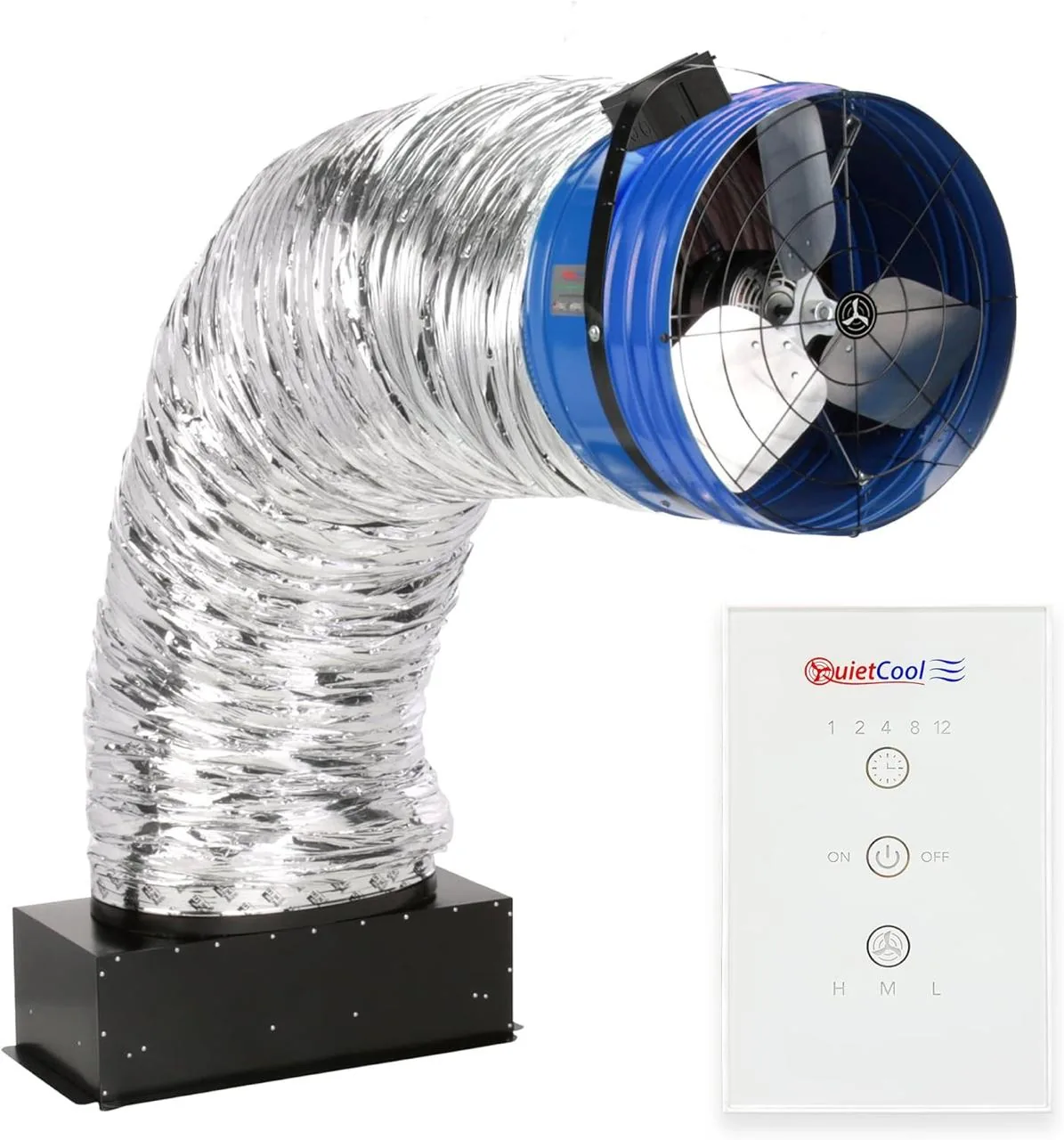
QuietCool CL-5400 Whole House Fan
Attic-mounted whole-house fan for night cooling in dry climates. Check your attic vent area against its cfm rating before buying.
Check price on AmazonStep 4: When It Needs a Professional
If the upstairs is still several degrees warmer after all that, the system itself is the limit.
- Duct testing and balancing. American Standard notes a professional can do a duct blower test to measure airflow to all rooms.
- Zoning. Bryant lists two-story homes where the upper floor is consistently warmer as good candidates, and says an existing system can be retrofitted with dampers, controls and a thermostat per zone.
- A ductless mini-split upstairs. American Standard and Lennox both suggest one for a top floor the main system cannot reach.
- The wrong size system. Trane says that if nothing else works, the home may be too large for the current system. If the equipment is 15 years old or more, American Standard suggests considering replacement.
Free: Home Energy Audit Checklist (PDF)
A two-page, room-by-room checklist for finding air leaks, standby power and heating and cooling waste yourself, in the order that pays back fastest. Get it now, plus new fix guides by email. Unsubscribe any time.
By signing up you agree to receive emails from EcoHome Intelligence. See our Privacy Policy.
Frequently Asked Questions
Why is my upstairs so much hotter than downstairs?
Hot air rises, the roof and attic radiate heat into the top floor, ducts to the second floor are often leaky, and a single downstairs thermostat shuts the system off before the upstairs has cooled.
Should I close downstairs vents to cool the upstairs?
Trane and Lennox both say no: it restricts airflow, makes the system work harder and can freeze the coil. A Lawrence Berkeley National Laboratory study found closing registers increased energy use because of higher duct leakage.
Does running the fan on ON help cool the upstairs?
Yes, according to Trane, American Standard and Lennox. Running the blower continuously mixes the air between floors.
Will a radiant barrier cool my upstairs?
In a hot, sunny climate it can cut cooling costs 5% to 10%, according to the Department of Energy, especially with ducts in the attic. In cooler climates, adding attic insulation is usually more cost-effective.
Are attic fans a good idea?
ENERGY STAR cautions that powered attic fans can pull conditioned air out of the house if the attic is not well sealed. A whole-house fan used with open windows on cool nights is a different thing and can work well in dry climates.
Related Guides
- Attic air sealing cost — what a fair quote looks like
- Attic insulation and your utility bill — adding insulation
- How to lower your electric bill in summer — the rest of the cooling bill
- Home energy audit checklist — a two-page printable
Sources
- Trane: Why is my house hot upstairs and cold downstairs?
- Lennox: Why is my house hot upstairs and cold downstairs
- American Standard: Hot upstairs and cold downstairs
- Bryant: HVAC zoning system guide
- Lawrence Berkeley National Laboratory: Register closing effects on forced air heating system performance
- U.S. Department of Energy: Radiant barriers
- PNNL Building America Solution Center: Attic radiant barriers
- U.S. Department of Energy Building America: Measure guideline, ventilation cooling (PDF)
- U.S. Department of Energy: Fans for cooling
- U.S. Department of Energy: Minimizing energy losses in ducts
- U.S. Department of Energy: Air conditioner maintenance
- U.S. Department of Energy: Energy Saver guide (PDF)
- ENERGY STAR: Duct sealing
- ENERGY STAR: Recommended home insulation R-values
- ENERGY STAR: About attic ventilation
