Free tool · Heating · Published 2026-10-19 · 1,200 words
Space Heater Cost Calculator
Work Out the Running Cost
Pick the heater’s wattage, how long it runs and your electricity price. The result is what it adds to your bill.
What a Space Heater Costs to Run
Running cost = watts ÷ 1,000 × hours × your price per kWh. A heater on its 1,500-watt setting uses 1.5 kWh each hour it runs flat out. At 18.31 cents per kWh, the Energy Information Administration’s U.S. residential average for July 2026:
| Setting | Per hour | 8 hours a day | 30 days at 8 hours |
|---|---|---|---|
| 1,500 W | 27¢ | $2.20 | $65.92 |
| 750 W | 14¢ | $1.10 | $32.96 |
Those are worst-case figures for a heater that never cycles off. A model with a working thermostat switches its element off once the room reaches the set temperature, so the real number is usually lower. Use your own bill’s price per kWh, including delivery charges, for an accurate answer.
Is There an “Energy-Efficient” Space Heater?
Not in the way the ads suggest. Every plug-in electric heater turns electricity into heat; the Department of Energy’s home heating fact sheet puts electric heating at 95 to 100% efficient. A 1,500-watt ceramic, oil-filled or infrared heater uses the same 1.5 kWh in an hour of full power.
What does change the bill is control: a thermostat that cycles the heater off, a low setting, a timer, and how long you leave it on. The type changes how the heat feels: ceramic fan heaters warm the air quickly, oil-filled radiators heat slowly and stay warm, and infrared heaters warm what is in front of them.
When a Space Heater Saves Money, and When It Costs More
- It can save when you heat one room and turn the main thermostat down for the rest of the house. You pay for one room instead of all of them.
- It costs more if the main heating stays at the same setting: the space heater is then extra.
- With a heat pump, be careful. The Department of Energy says an air-source heat pump can deliver up to two to four times more heat energy than the electricity it uses. A space heater delivers one unit of heat per unit of electricity, so heating a room with it costs more than heating the same room with a heat pump. Use it only if you turn the heat pump down for the rest of the house. Our heat pump vs furnace calculator compares whole-house costs.
If one room is always cold, the cause is often a draft or missing insulation. Our guide to fixing drafty rooms covers the cheaper fixes first.
Three Heaters With Controls That Cut Running Time
Chosen on published specifications: all three run at 1,500 W, so the differences are the controls and safety features that decide how long they run.
We may earn a commission if you buy through these links, at no extra cost to you. Products are chosen on published specifications; we do not test them in-house (how we choose).
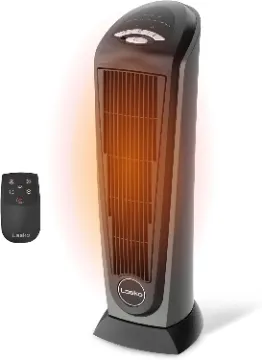
Lasko 751320 Ceramic Tower Heater
Lasko lists two heat settings plus an adjustable thermostat, a 7-hour timer, overheat protection and ETL listing. A budget choice for a bedroom or home office.
Check price on Amazon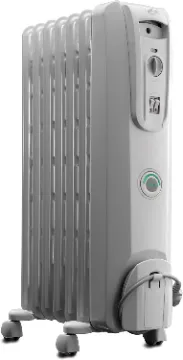
De’Longhi EW7707CM Oil-Filled Radiator
No fan, so it is quiet. De’Longhi lists a ComfortTemp mode it says is up to 20% more efficient than running the same heater at its maximum thermostat setting, a thermal cut-off, and an anti-freeze setting that switches on below 41°F.
Check price on Amazon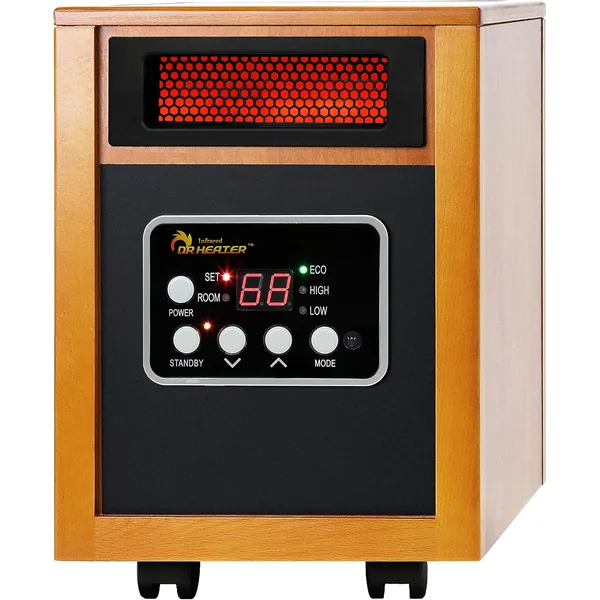
Dr Infrared Heater DR-968
For a larger room: an electronic thermostat from 50 to 85°F, a 12-hour shut-off timer, tip-over and overheat protection, and a remote.
Check price on AmazonUse It Safely
The Consumer Product Safety Commission estimates that portable heaters, including electric space heaters, are involved in an average of 1,600 fires per year (2020 to 2022). Its tips:
- Keep heaters at least three feet from drapes, furniture, bedding and anything else that can burn.
- Plug electric space heaters directly into a wall outlet, never into an extension cord or power strip. That also rules out plugging one into a smart plug.
- Turn heaters off when you go to sleep.
Pick a model with tip-over and overheat protection and a safety listing (UL, ETL or CSA) on the label.
Heating Is the Biggest Part of the Bill: Find the Leaks
A space heater fixes one cold room. The free two-page checklist walks you through the drafts, insulation gaps and thermostat settings that make the whole house cost more to heat. Get it now, plus new guides by email. Unsubscribe any time.
By signing up you agree to receive emails from EcoHome Intelligence. See our Privacy Policy.
Frequently Asked Questions
How much does it cost to run a space heater for 8 hours?
At 1,500 watts it uses 12 kWh in 8 hours of full power. At 18.31 cents per kWh, EIA’s U.S. residential average for July 2026, that is about $2.20. On the 750-watt setting it is about $1.10.
How much does a space heater add to the monthly electric bill?
Running a 1,500-watt heater flat out for 8 hours a day for 30 days uses 360 kWh, about $65.92 at 18.31 cents per kWh. A thermostat that cycles it off lowers that; enter your own hours and price above.
Is it cheaper to run a space heater or central heat?
It can be cheaper if you heat one room and turn the central thermostat down for the rest of the house. If you leave the central heat at the same setting, the space heater is an extra cost. With a heat pump, the heat pump makes heat more cheaply than a space heater.
Do energy-efficient space heaters use less electricity?
Not per hour at the same setting. Electric heaters convert electricity to heat at 95 to 100% efficiency, so a 1,500-watt heater uses 1.5 kWh an hour at full power whatever the type. Thermostats, low settings and timers are what reduce the total.
Can I plug a space heater into a power strip or smart plug?
No. The Consumer Product Safety Commission says to plug electric space heaters directly into a wall outlet, never into an extension cord or power strip.
Related Guides
- Why is my electric bill so high in winter? — the usual causes
- Fix drafty rooms — cheaper than heating them
- Mini-splits for supplemental heat — a more efficient option for one room
- Heat pump vs furnace calculator — our whole-house heating tool
- Most energy-efficient space heater: 4 picks — what actually lowers the cost
