EcoGuide · Thermal Leaks · Updated 2026-11-20 · 1,300 words
Best Dehumidifier for a Basement: Midea Cube vs Frigidaire
Check today’s prices
Prices on Amazon change often. As an Amazon Associate we earn from qualifying purchases, at no extra cost to you.
The Short Answer
For a damp basement, a 50-pint ENERGY STAR dehumidifier is the usual choice: ENERGY STAR’s sizing table recommends 30 to 50 pints a day for a wet space under 2,000 sq ft and says “it’s better to oversize than undersize” (ENERGY STAR). Both picks below are ENERGY STAR certified with the same efficiency rating, so the choice comes down to drainage, noise and price.
| If you want | Pick | Amazon, Nov 20, 2026 |
|---|---|---|
| A pump to empty into a sink or out a window, for less | Midea Cube 50-pint | $229.99 |
| The quietest unit and the biggest bucket | Frigidaire FHDD5034Y1 | $307.74 |
- Set it to 50% or lower. ENERGY STAR says the ideal indoor humidity is 30% to 50% and that anything higher may promote mold growth.
- Close the basement off. ENERGY STAR advises keeping doors and windows to the space closed while it runs.
- Fix the water first. A dehumidifier treats damp air; it does not stop water coming through walls or the floor. See basement condensation.
Efficiency and energy figures come from ENERGY STAR’s certified dehumidifier list and buying guidance; features from the Midea and Frigidaire product pages, checked November 15, 2026. We compare published specifications and do not test products in-house (how we choose).
What a Dehumidifier Costs to Run
ENERGY STAR lists the annual energy use of each certified model: 515 kWh a year for the Midea Cube 50-pint and 521 kWh a year for the Frigidaire FHDD5034Y1 (ENERGY STAR). For example, at 17 cents per kWh, 515 kWh is about $88 a year; use the rate on your own bill. Real use depends on how damp the basement is and how many months you run it.
ENERGY STAR says certified dehumidifiers use about 20% less energy than conventional models to remove the same amount of water (ENERGY STAR). Efficiency is rated as an integrated energy factor (IEF), in liters of water removed per kWh. For 25 to 50-pint portable models the ENERGY STAR minimum is 2.01 L/kWh (ENERGY STAR criteria), and both picks are rated exactly 2.01, so neither saves meaningfully more energy than the other.
Before You Buy: Drainage and Temperature
- Bucket, hose or pump. A 50-pint unit can fill its bucket more than once a day in a wet basement. A gravity hose works if a floor drain sits lower than the unit; a built-in pump pushes water up to a sink or out of a window, which is what you need when there is no drain.
- Cold basements. ENERGY STAR notes frost can form on the coils below 65°F. Frigidaire says the FHDD5034Y1 is designed to run down to 41°F (Frigidaire); Midea’s product page does not give a low-temperature limit.
- Placement. Units that blow air out of the top can sit against a wall; otherwise ENERGY STAR advises keeping them away from walls and furniture (ENERGY STAR).
The Two Dehumidifiers Compared
| Midea Cube 50-pint | Frigidaire FHDD5034Y1 | |
|---|---|---|
| Capacity (ENERGY STAR) | 49.67 pints/day | 49.71 pints/day |
| Efficiency (IEF) | 2.01 L/kWh | 2.01 L/kWh |
| Energy use (ENERGY STAR) | 515 kWh/year | 521 kWh/year |
| Drainage | Built-in pump, or bucket | Gravity drain hose, or bucket |
| Bucket | Not stated | 2.7 gallons |
| Noise (maker) | Not stated | 47 to 51 dBA |
| Size (W × H × D) | 14.5 × 14.8 × 14.6 in | 15.9 × 24.7 × 12.2 in |
| App control | Yes | Yes |
| Warranty (maker) | 1 year (as listed) | 1 year |
| Amazon, Nov 20, 2026 | $229.99 | $307.74 |
Capacity, efficiency and energy figures from ENERGY STAR (Midea model MAD50PS1QWT-A); features from Midea and Frigidaire. Amazon prices checked by hand on November 20, 2026, each sold by the brand’s own Amazon store; they change often.
1. Midea Cube 50-Pint: Best for Most Basements
Midea’s Cube has a built-in pump for continuous drainage out of a window or into a sink, and a “lift-and-twist” design that runs extended or nested, so it packs down small when you store it. Midea lists 50 pints a day, spaces up to 4,500 sq ft, app and voice-assistant control, wheels and a 41.5 lb weight (Midea). ENERGY STAR lists model MAD50PS1QWT-A at 49.67 pints a day, 2.01 L/kWh and 515 kWh a year (ENERGY STAR). It has the pump and still costs less than the Frigidaire.
Know before you buy: Midea’s page does not list noise, bucket size or a low-temperature limit. The 4,500 sq ft figure is Midea’s own; ENERGY STAR’s table points to 50 pints for a wet space under 2,000 sq ft.
We may earn a commission if you buy through these links, at no extra cost to you. Products are chosen on published specifications; we do not test them in-house (how we choose).
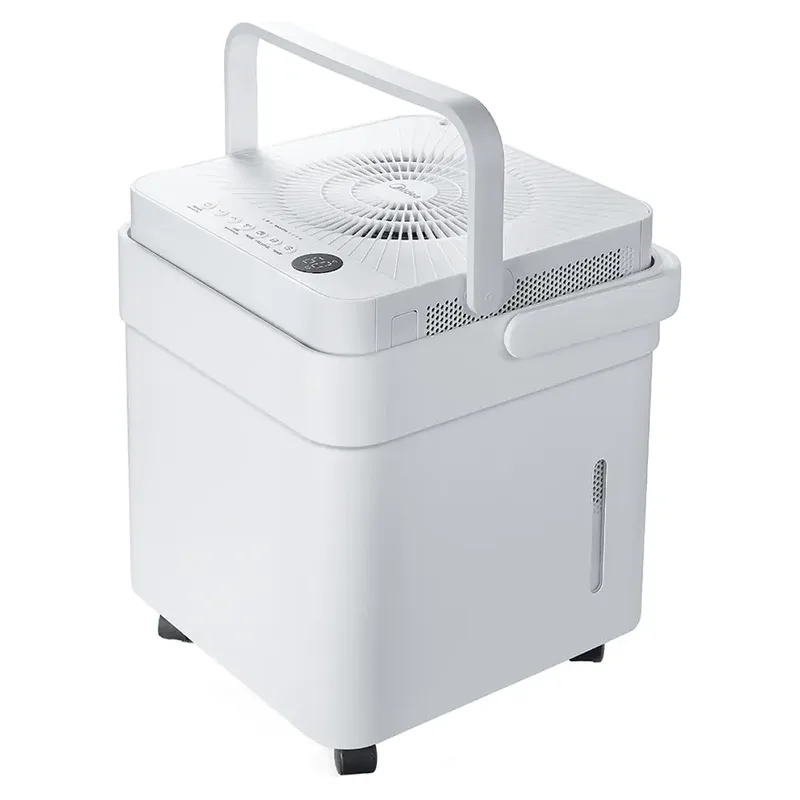
Midea Cube 50-Pint Dehumidifier with Built-in Pump
50 pints/day; built-in pump; foldable cube design; app control; ENERGY STAR, 515 kWh/year. $229.99 on Amazon on Nov 20, 2026, sold by Midea.
Check price on Amazon2. Frigidaire FHDD5034Y1: Quietest, Biggest Bucket
Frigidaire lists a 2.7-gallon bucket, a continuous drain hose option, 35% to 85% humidity settings, Wi-Fi with the Frigidaire app, 470 watts, noise from 47 dBA on low to 51 dBA on high, operation down to 41°F and compatibility with its optional PureAir allergen filter, with a 1-year warranty (Frigidaire). ENERGY STAR lists it at 49.71 pints a day, 2.01 L/kWh and 521 kWh a year (ENERGY STAR).
Know before you buy: it has no pump, so the hose drains by gravity only and cannot empty into a sink or out of a window above it. It is also taller (24.7 inches). Choose it if a floor drain sits lower than the unit, or if you will empty the bucket and want fewer trips.
We may earn a commission if you buy through these links, at no extra cost to you. Products are chosen on published specifications; we do not test them in-house (how we choose).
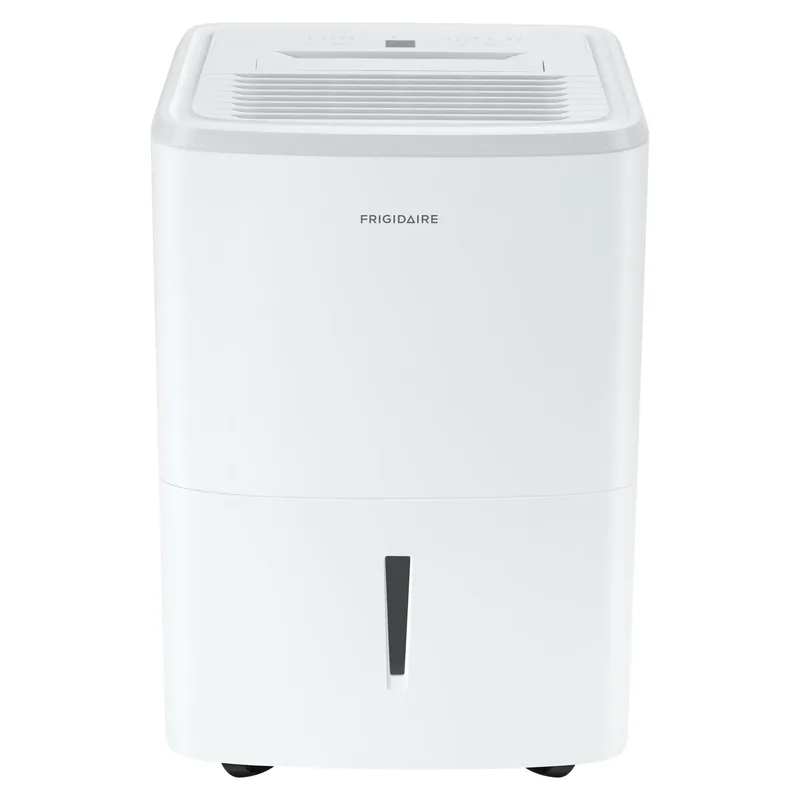
Frigidaire 50-Pint Dehumidifier with Wi-Fi (FHDD5034Y1)
50 pints/day; 2.7-gal bucket; gravity drain hose; 47-51 dBA; runs down to 41°F; Wi-Fi; ENERGY STAR, 521 kWh/year. $307.74 on Amazon on Nov 20, 2026, sold by Frigidaire.
Check price on AmazonFree: Home Energy Audit Checklist (PDF)
A two-page, room-by-room checklist for finding air leaks, standby power and heating and cooling waste yourself, in the order that pays back fastest. Free to download, no sign-up needed.
Download the checklist (PDF)Frequently Asked Questions
What size dehumidifier do I need for a basement?
ENERGY STAR recommends 20-30 pints a day for a slightly damp space under 2,000 sq ft, 25-40 for a very damp one and 30-50 for a wet one, and says it is better to oversize than undersize.
How much does it cost to run a dehumidifier?
ENERGY STAR lists 515 kWh a year for the Midea Cube 50-pint and 521 kWh a year for the Frigidaire FHDD5034Y1. For example, at 17 cents per kWh, 515 kWh is about $88 a year. Your cost depends on your rate and how much you run it.
What humidity should I set a basement dehumidifier to?
ENERGY STAR says the ideal indoor humidity is generally 30% to 50% and that higher levels may promote mold growth.
Do I need a dehumidifier with a pump?
Only if there is no floor drain lower than the unit. A pump pushes water up into a sink or out of a window; without one, you empty the bucket or use a gravity hose.
Can a dehumidifier run in a cold basement?
ENERGY STAR notes frost may form below 65°F. Frigidaire says the FHDD5034Y1 is designed to run down to 41°F; Midea does not publish a low-temperature limit for the Cube.
Related Guides
- Basement condensation — fix the cause, not just the air
- Drafty basement — seal the rim joist
- Thermal cameras — find cold, damp spots