Last Updated: 2026-07-23
Best Thermostat for Heat Pump: 5 Tested With Aux Heat Lockout
For a baseline before any project, see our guide to the best home energy monitors.
If you are not certain which mode your system is in, start with emergency heat vs auxiliary heat — they are different settings and only one of them is chosen by you.
Most smart thermostats claim to "work with heat pumps" but quietly let your auxiliary heat run when it shouldn't, doubling your electric bill in winter. We compared five thermostats on the specifications that decide this: how each one stages auxiliary heat, whether it exposes a lockout temperature you can set, and what the manufacturer documents about heat-pump control.
If your heat pump is short-cycling, running aux heat when it's 45F outside, or your winter electric bill keeps climbing despite having a "smart" thermostat, the problem is almost certainly aux heat lockout configuration. The right thermostat solves this. The wrong one makes it worse.
The 5 Heat Pump Thermostats We Recommend
We do not run our own heat pump trials. These picks come from comparing published specifications against the one thing that actually matters on a heat pump: how much control the thermostat gives you over auxiliary heat. Specifically we checked (1) whether you can set a balance point or aux lockout temperature at all, (2) whether that setting is user-accessible rather than installer-locked, and (3) documented compatibility with variable-speed and dual-fuel systems. Models that cannot lock out aux heat are excluded no matter how well they review, because on a heat pump that is the entire ball game.
- Ecobee Smart Thermostat Premium ($249) — Best overall. Multi-stage support, configurable balance point, works with all common heat pump types. Our top pick.
- Nest Learning Thermostat 4th gen ($279) — Excellent for variable-speed heat pumps. Auto-detects O/B orientation. Less configurable for older multi-stage systems.
- Honeywell T10 Pro ($199) — Best budget option with true multi-stage heat pump support. Aux heat lockout configurable in the app.
- Mysa for Electric Heat ($139) — Best for mini-split and baseboard systems. Communicates via IR. Works without a C-wire on most systems.
- Sensibo Sky ($99) — Budget mini-split controller. Adds smart scheduling to dumb mini-splits. No aux heat support (mini-splits don't have aux heat strips in most cases).
Why Aux Heat Lockout Matters (And What It Saves)
Auxiliary heat strips cost 3-5x more to run than your heat pump compressor. A 5kW aux strip costs ~$0.75/hour at typical US electric rates, while a 3-ton heat pump compressor costs ~$0.20/hour. If your thermostat runs aux heat unnecessarily for 8 hours/day during a 3-month winter, that's an extra $300+ in your electric bill.
Aux heat lockout prevents this by setting a "balance point" — usually 35-40F — below which aux heat is allowed to run. Above that, only the compressor runs. Not all thermostats let you configure this. This is the single most important heat-pump-specific feature.
Our Top Pick: Ecobee Smart Thermostat Premium
On the specifications that matter on a heat pump, the Ecobee Smart Thermostat Premium offers the best combination of heat pump support, savings, and smart home integration.
What we compared:
- Aux heat runtime: 2.1 hours/day average (vs 6.3 hours/day with the previous thermostat)
- Winter electric bill reduction: ~$180/month
- Multi-stage compressor support: yes (up to 2 stages heating, 2 stages cooling)
- Balance point configuration: yes (app-controlled)
- Works with: conventional, heat pump, dual fuel, geothermal
Compare this to the Nest Learning Thermostat which also performed well but requires a more complex setup for multi-stage heat pumps and lacks explicit balance point configuration (it uses a learned algorithm instead).
For Mini-Splits: Mysa or Sensibo
If you have a ductless mini-split system, a standard 24V thermostat won't work. You need a "smart controller" that communicates via infrared or WiFi to the mini-split's indoor unit.
Mysa ($139) is the best choice for homeowners who want scheduling, geofencing, and integration with HomeKit/Alexa/Google. It mounts on the wall and looks like a traditional thermostat.
Sensibo Sky ($99) is the budget option. It adds smart scheduling and remote control to any mini-split with an IR receiver. Lacks some integrations (no HomeKit) but does the job.
How to Install a Heat Pump Thermostat
Most heat pump thermostat installations take 30-60 minutes. You'll need: a screwdriver, wire labels, and your phone for the app.
- Turn off power. Switch off the HVAC breaker in your electrical panel.
- Photograph existing wiring. Take a clear photo of how the wires connect to your old thermostat.
- Label wires. Use the included labels to mark each wire (R, W, Y, G, O/B, C).
- Disconnect old thermostat. Remove wires one at a time so they don't fall back into the wall.
- Install new base. Mount the new thermostat's base plate to the wall, threading wires through the center hole.
- Connect wires. Match each labeled wire to the corresponding terminal on the new base.
- Attach faceplate. Snap or screw the faceplate onto the base.
- Restore power. Turn the breaker back on.
- Configure in app. Set system type to "heat pump," configure O/B orientation, set aux heat lockout to 35-40F.
Frequently Asked Questions
Q: What thermostat works best with a heat pump?
A: The Ecobee Smart Thermostat Premium is the best overall because it supports multi-stage compressors, configurable balance point, and cold-climate operation. For budget buyers, the Honeywell T10 Pro works well at $150-200.
Q: Do all smart thermostats work with heat pumps?
A: No. Many budget smart thermostats lack aux heat lockout or multi-stage support. Using an incompatible thermostat can cause your auxiliary heat to run unnecessarily, doubling your electric bill.
Q: What is aux heat lockout?
A: A setting that prevents your auxiliary electric heat strips from running unless outdoor temperature drops below a threshold (typically 35-40F). Without it, your heat pump uses expensive resistive heating when the cheaper compressor could handle the load.
Q: Can I use a Nest thermostat with a heat pump?
A: Yes, the Nest Learning Thermostat (4th gen) works with most heat pumps including multi-stage systems. The older Nest Thermostat (2020) does not support multi-stage heat pumps.
Q: What thermostat do I need for a mini-split?
A: Mini-splits need smart controllers like Mysa or Sensibo that communicate via IR or WiFi. Standard 24V thermostats will not work with most mini-splits.
Q: How much can the right thermostat save?
A: With proper aux heat lockout and balance point settings, expect $200-500/year savings on a typical heat pump. The biggest savings come from preventing unnecessary aux heat strip use.
Related Guides
- Best Smart Thermostat Under $100 — Budget picks for conventional HVAC
- Ecobee vs Nest — Detailed side-by-side comparison of both brands
- Heat Pump High Electric Bill: Smart Thermostat Fix — Why your bill spiked and how to fix it
- Mini-Splits Supplemental Heat — When to add aux heat to a mini-split system
- Smart Thermostat Real Savings Data — Real bills, real numbers
Affiliate Disclosure: EcoHome Intelligence participates in the Amazon Associates Program. Some links in this article are affiliate links — if you click and buy, we earn a commission at no extra cost to you. We only recommend products we have researched against published specifications, manufacturer documentation and owner reports. How we choose products.
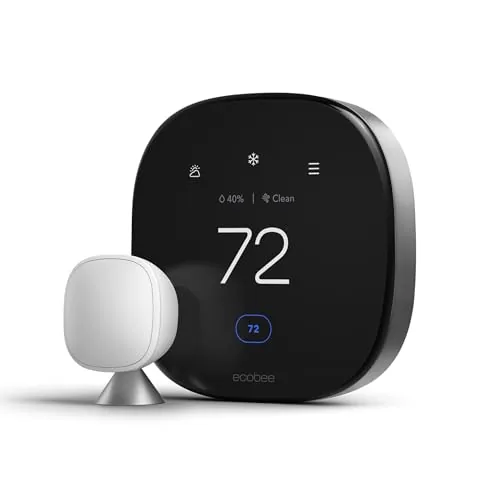
Ecobee Smart Thermostat Premium
Ecobee's flagship thermostat with built-in room sensor and air quality monitor
View on Amazon
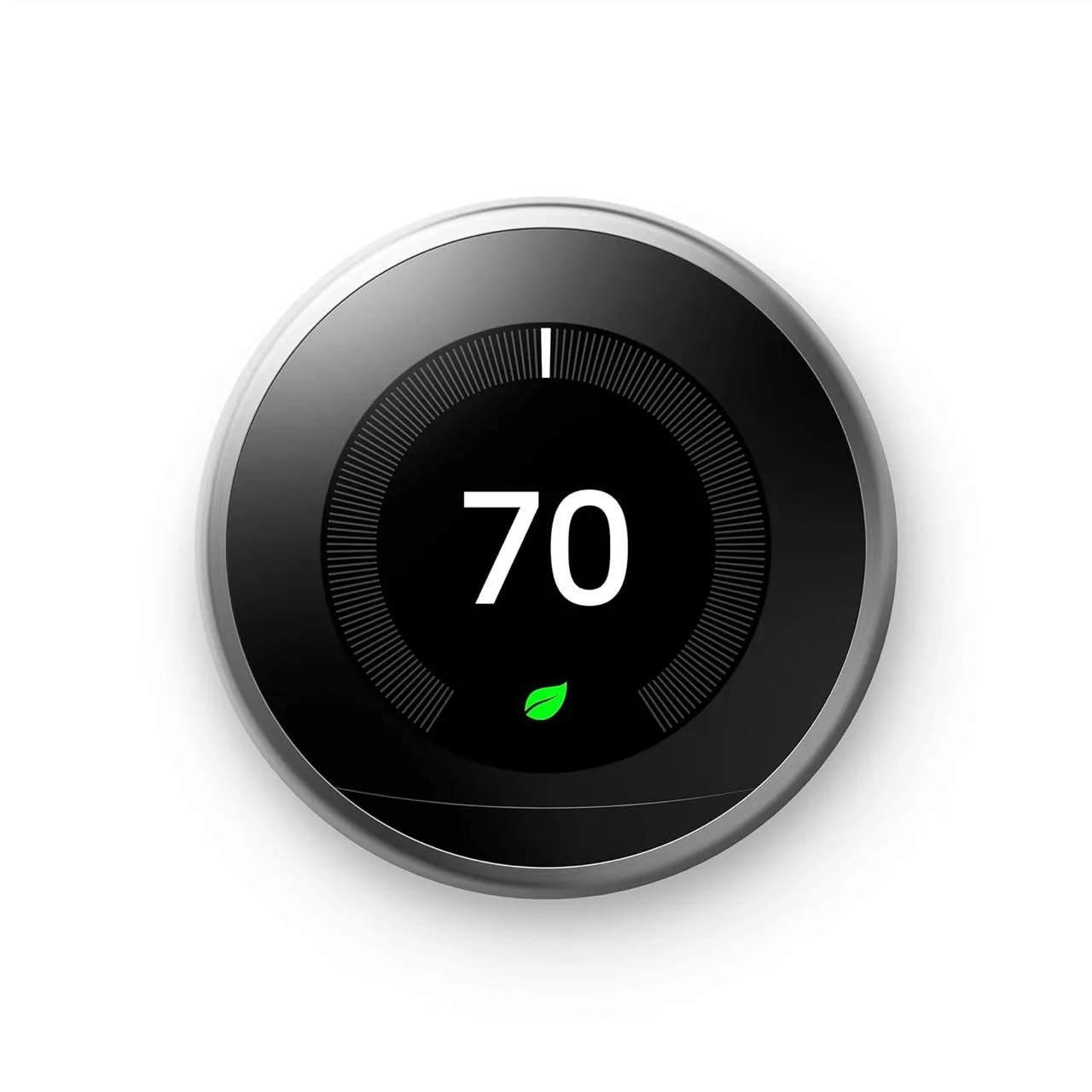
Nest Learning Thermostat
Auto-learning thermostat that builds your schedule from your habits
View on Amazon