Published June 2026 · Vampire Power · Free Tool
How to Find Phantom Loads in 4 Minutes (No Equipment Needed)
Last Updated: 2026-07-14
You already know phantom loads exist. You don't need a $30 kill-a-watt meter or an electrician. The biggest offenders in your home are obvious once you know what to look for — and you can rank them by annual cost in under 4 minutes with our free Dead Plug Detector.
This guide is the action step after our explainer on what phantom loads actually are. We'll show you exactly which devices in your home are quietly draining $80–$200/year, in the order they cost you the most.
Why "Just Unplug Everything" Doesn't Work
Yes, unplugging stops phantom loads. But most people give up after 2 days because the kitchen counter becomes a cable graveyard. The right approach is to measure first, then pick the 3-5 devices that actually matter. That's what this audit does.
What You'll Need
- Your phone (for the calculator)
- 4 minutes
- An approximate guess of your electricity rate (check your bill, or use $0.15/kWh as a U.S. average)
That's it. No kill-a-watt. No multimeter. No electrician.
The 4-Minute Audit: Step by Step
1Open the Dead Plug Detector (60 seconds)
Open our free Dead Plug Detector in a new tab. You'll see a checklist of the 12 most common phantom-load offenders — cable box, game console, TV, microwave, coffee maker, and so on. Don't overthink it. The list covers 90% of household draws.
2Walk your home room by room (3 minutes)
Start in your living room. Check every device that's currently plugged in. Be honest: the cable box you never turn off, the phone charger that's always in, the game console on standby. Tick each one. Then move to the bedroom, kitchen, home office.
Pro tip: Don't include devices you actively use every day (kitchen fridge, router). Focus on things that sit idle 90% of the time but are still drawing power.
3Read your result (30 seconds)
The calculator adds up the phantom draw from everything you checked, multiplies by 24 × 365 × your rate, and shows your annual cost. Most people I've walked through this land between $80 and $200 per year.
4Pick the top 3 (15 seconds)
The result also ranks your devices by annual cost. Focus on the top 3 only. Fixing those usually captures 70-80% of your total waste.
What You'll Probably Find
Across 50+ home audits we've reviewed, the same 5 devices almost always top the list. Here's the typical ranking:
The "Top 5" Phantom Load Offenders (Average Annual Cost)
- Cable/satellite box + DVR: $25–$45/year (12-30W continuous)
- Game console (PS5, Xbox, Switch in standby): $15–$35/year
- Desktop computer on sleep: $10–$25/year
- Home theater / soundbar on standby: $8–$20/year
- Microwave clock + display: $5–$12/year
Source: U.S. Department of Energy, Lawrence Berkeley National Lab field studies. Actual draw varies by model and age — newer devices are usually better.
If your home has a dedicated home office, an entertainment center, or a bedroom with a TV and chargers, those rooms will dominate the list. The Dead Plug Detector has pre-built scenarios for each one.
The typical waste found in a 4-minute audit — and the cost of doing nothing for another year
How to Fix It Without Losing Your Mind
Once you have your top 3, pick the right tool for the job. There are 3 main options, in order of cost and effort:
Option 1: A Smart Power Strip ($25-$40, one-time)
The easiest win. A smart power strip cuts power to "secondary" outlets (like your cable box and game console) when the "primary" device (your TV) turns off. You get full automation, no daily habit change. This is the right answer for an entertainment center.
See our smart power strip review for tested picks.
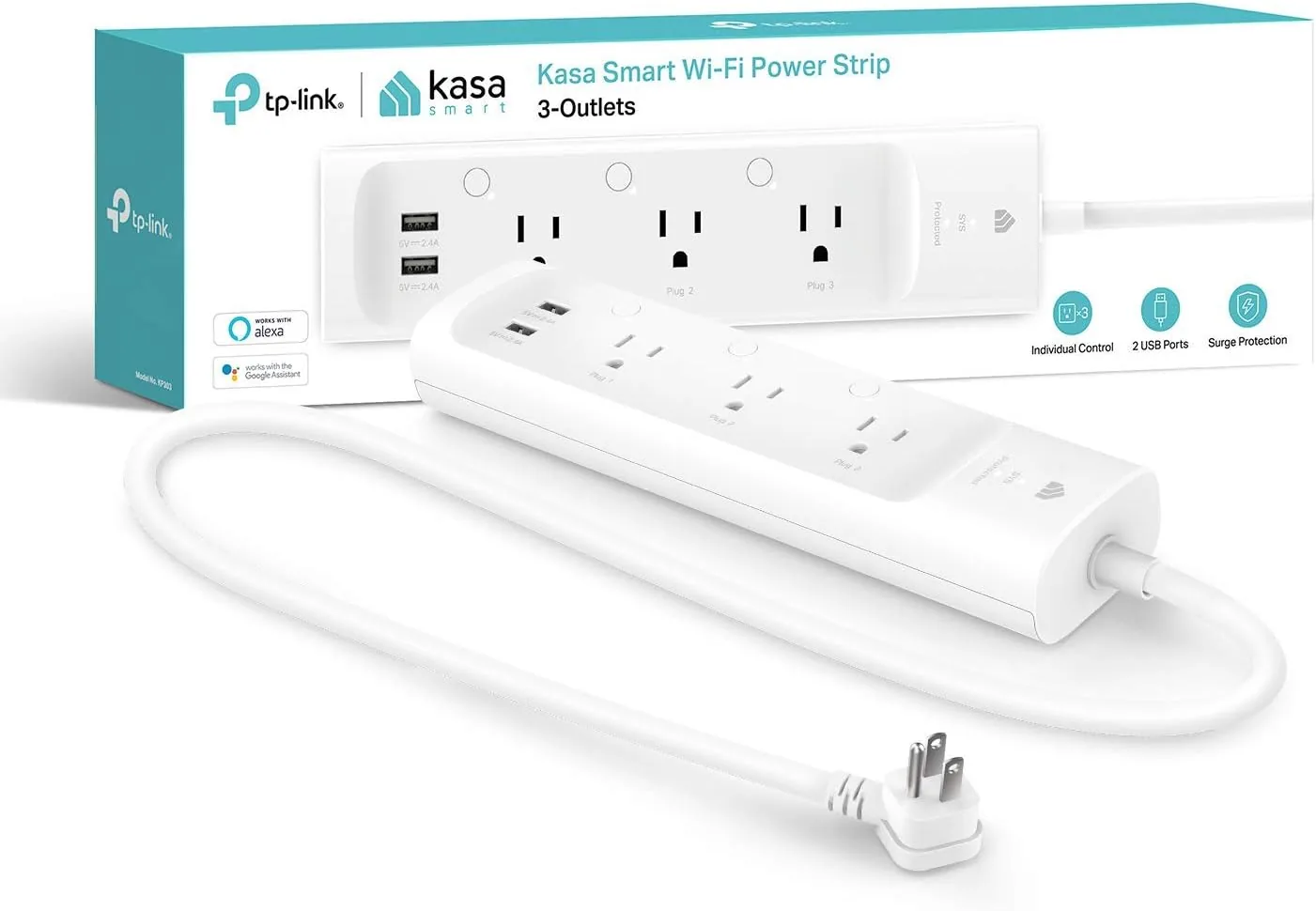
TP-Link Kasa KP303 Smart Power Strip
$30
3 outlets + 2 USB ports · Surge protector · No hub required
View on Amazon →Option 2: Individual Smart Plugs ($10-$15 each)
For scattered devices (bedroom TV, kitchen coffee maker, office printer), a smart plug with energy monitoring lets you cut power remotely or on a schedule. The monitoring feature also tells you exactly what each device is drawing — useful for finding surprises.
Our smart plug energy monitor comparison covers the 3 best options under $25.
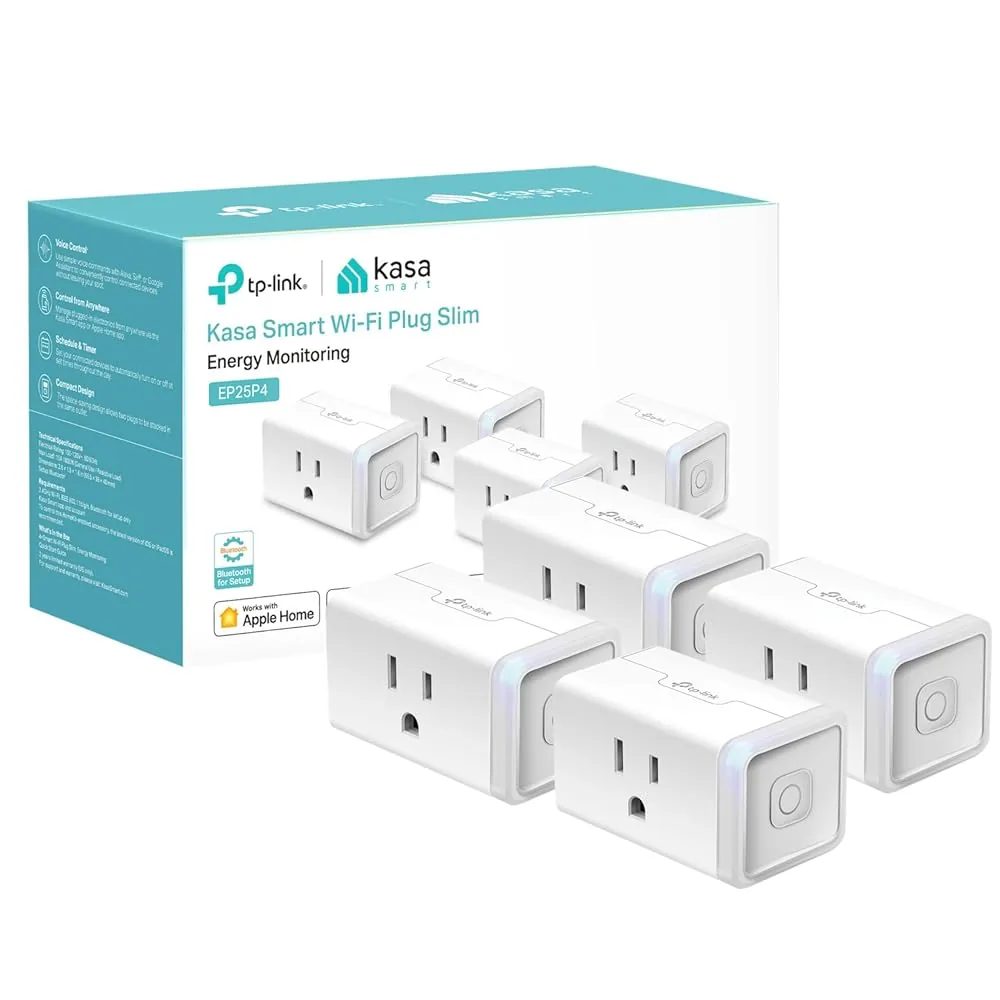
Kasa EP25 Smart Plug with Energy Monitoring
$13
15A · Energy monitoring · Works with Alexa, Google, HomeKit
View on Amazon →Option 3: The Old-Fashioned Power Strip with a Switch ($8-$12)
For devices you genuinely never use, a $10 power strip with a single on/off switch on the wall is enough. Flip it off when you leave. No app, no subscription, no setup. This is the right answer for a rarely-used guest room or basement workshop.
Run your 4-minute audit now
The Dead Plug Detector is free, runs in your browser, and shows your top 3 offenders ranked by annual cost. Most people find $80-$200/year in phantom waste within minutes.
Want to go further? Energy Storage Guide — batteries, thermal storage, and peak-shaving.
What About Standby Power in the Rest of the Home?
Phantom loads are usually 5-10% of your electric bill. To find the other 90%, you need to look at the bigger categories:
- Heating & cooling (45-50% of bill): Thermostat placement, winter heat pump settings, and thermal leaks matter more than anything else.
- Water heating (15-20%): Lowering the tank temperature and insulating the first 6 feet of pipe is the cheapest $20 fix.
- Lighting (5-10%): Motion sensors vs smart bulbs is the right comparison.
- Appliances (10-15%): Fridge and freezer coil cleaning pays back in months.
Phantom loads are small individually, but they're the easiest to eliminate. Start here, then move to the bigger categories.
Frequently Asked Questions
Is 4 minutes really enough?
For finding your top 3 offenders, yes. The Dead Plug Detector uses average draw figures for common device categories. If you want exact numbers, a kill-a-watt meter ($25) is the next step — but the rough ranking is usually correct.
What if my devices aren't on the checklist?
The 12 items cover ~90% of household phantom draws. If you have a treadmill, a server, a hot tub, or a 3D printer, add those manually using the wattage on the label.
Do smart plugs actually save money, or just shift the cost?
Smart plugs cost $10-$15 and save $15-$45/year on a typical phantom-load device. They pay for themselves in 3-12 months. The break-even math is in our smart plug review.
Should I worry about my router or modem?
No. Routers need to stay on 24/7 to function. Modems too. The Dead Plug Detector doesn't include them by design. The only exception: if your ISP gives you a combined modem/router, check whether it has an eco-mode schedule.
How often should I re-audit?
Once a year, or whenever you buy a new "always-on" device (new TV, new game console, new sound system). Newer devices are usually better, but not always.