EcoGuide · Electric Bills · Updated 2026-10-12 · 1,300 words
Portable AC Running Up Your Electric Bill? How to Cut the Cost
The Short Answer
Portable air conditioners are convenient, but they are the least efficient common way to cool a room. Consumer Reports’ testing found they are typically bigger, noisier, and more expensive than window units, and they use more energy. Its advice if you can fit one: buy a window unit.
If a portable is what you have, or your window or lease rules out anything else, you can still cut what it costs: size it properly, seal the window kit, stop the sun before it gets in, and set it to 78°F with a fan.
Why Portables Cost More
A portable AC has to dump its heat outdoors through a hose. A single-hose unit uses room air to cool its condenser; as Consumer Reports puts it, a single-hose portable AC uses conditioned air from inside the room to cool the mechanicals and then blows it outside.
That air has to be replaced. The Department of Energy, in its test procedure for these units, observed that infiltration from outside the conditioned space occurs due to the negative pressure this creates. In plain terms, hot outdoor air is pulled in through every gap in the house to replace what the unit throws out. Dual-hose units draw some of their condenser air from outside, which reduces the problem.
Federal efficiency standards for portables took effect in 2025: compliance with the standards has been required since January 10, 2025, and the advocacy group ASAP says they will reduce portable AC energy use by more than 20%. Even so, Consumer Reports notes the rating is still not directly comparable with a window unit’s, and ENERGY STAR does not certify portable air conditioners at all.
Work Out What Yours Costs
Virginia Tech Extension’s method: multiply the wattage by hours used per day and divide by 1,000 to get kilowatt-hours a day, then multiply by your rate.
Example: a unit with a 1,000-watt nameplate running 8 hours a day uses 8 kWh a day, or about 240 kWh a month. At EIA’s July 2026 national average residential price of 18.31 cents per kWh, that is about $44 a month. The compressor cycles, so real use is usually somewhat lower than the nameplate math; a plug-in meter gives you the actual figure.
Use the wattage on your unit’s label and the price per kWh on your own bill, which may be well above or below the national average.
Fix 1: Make Sure It Is the Right Size
An undersized unit runs flat out and never catches up; an oversized one cycles and leaves the room clammy. ENERGY STAR’s sizing chart for room air conditioners:
| Room size (sq ft) | Capacity (BTU/h) |
|---|---|
| 150 to 250 | 6,000 |
| 250 to 300 | 7,000 |
| 300 to 350 | 8,000 |
| 350 to 400 | 9,000 |
| 400 to 450 | 10,000 |
| 450 to 550 | 12,000 |
ENERGY STAR adds that if the room is heavily shaded you should reduce capacity by 10 percent, and increase it by 10 percent if it is very sunny. For a portable, compare the room with the newer SACC rating on the box, which is lower than the old headline BTU figure.
Fix 2: Seal the Window Kit and Look After the Hose
- Seal around the window adapter. One manufacturer’s manual says the gap between the adapter and the window should be sealed off for maximum efficiency. Foam weatherstrip tape along the sash and the edges of the panel does the job.
- Keep the hose short and straight. NewAir’s manual says to avoid kinks and bends in the exhaust hose and to use the shortest length possible. Don’t add extensions.
- Seal the rest of the room. Because the unit pulls in outside air, gaps around other windows and doors in the room cost you more than usual. Close doors to other rooms so you cool only the space you use.
Fix 3: Stop the Sun Before It Gets In
Every bit of solar heat that comes through the glass has to be pumped back out. Consumer Reports, citing Department of Energy figures, says:
- Awnings can reduce solar heat gain by up to 65 percent on south-facing windows and 77 percent on west-facing windows.
- Medium-colored drapes with white plastic backings can reduce heat gain by 33 percent.
- Highly reflective blinds, completely closed, can reduce heat gain by around 45 percent.
Close the coverings on sun-facing windows before the sun reaches them, not after the room has heated up. More options in our window treatments guide.
Fix 4: Set It to 78°F and Add a Fan
ENERGY STAR’s advice for room units: set the thermostat as high as is comfortable, typically 78° F. A fan makes that comfortable. The Department of Energy says a ceiling fan will allow you to raise the thermostat setting about 4°F with no reduction in comfort. Fans cool people, not rooms, so turn them off when you leave.
Use the unit’s timer to start it shortly before you get home rather than running it all day, and don’t run a portable at the same time as central air in the same space.
Products That Help
We may earn a commission if you buy through these links, at no extra cost to you. Products are chosen on published specifications; we do not test them in-house (how we choose).

NICETOWN Thermal Insulated Blackout Curtains
Thermal-backed blackout curtains for the sunny window. Close them in the morning.
Check price on Amazon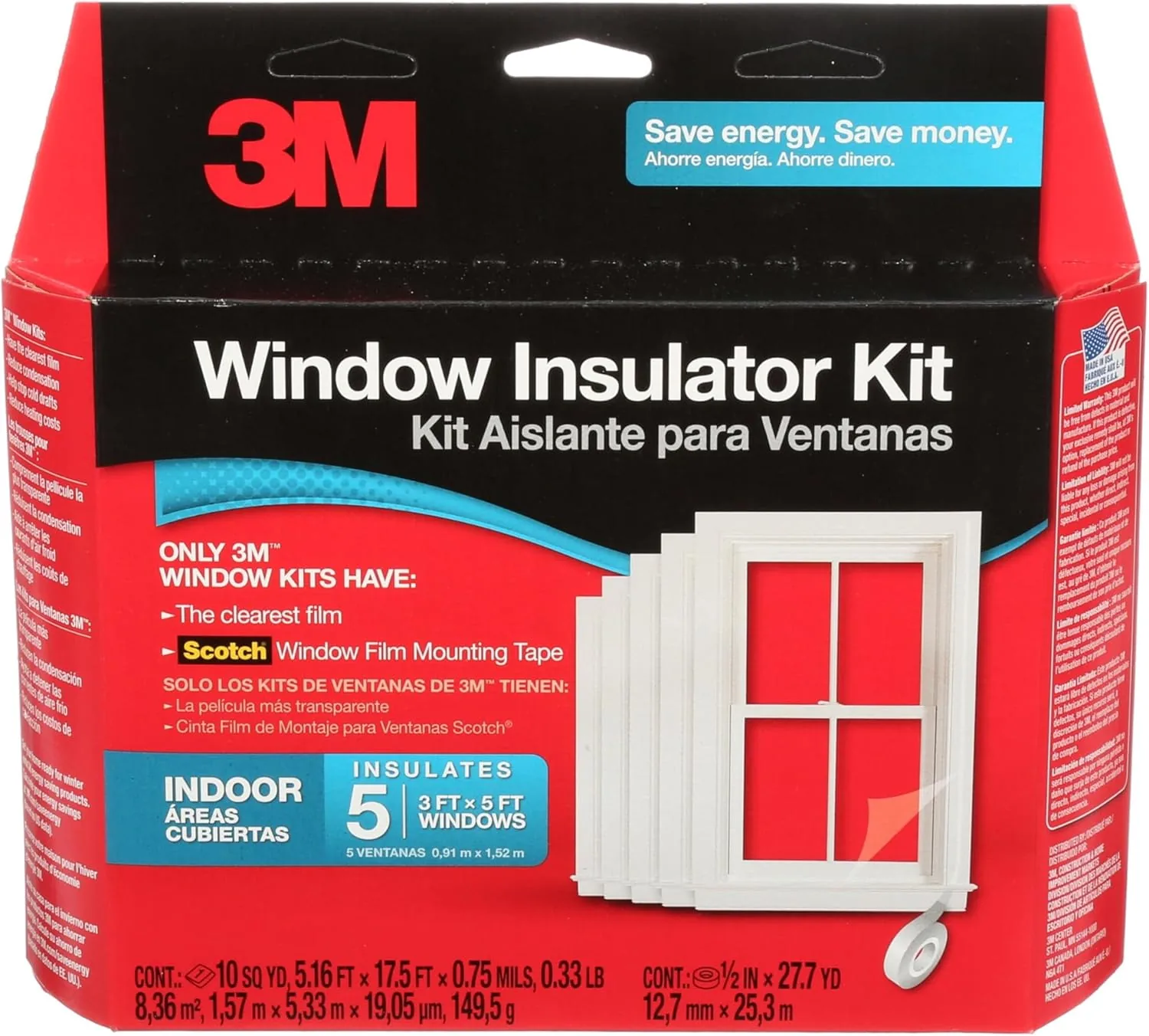
3M Indoor Window Insulator Kit
Clear film for the other windows in the room, to cut the outside air the unit pulls in.
Check price on Amazon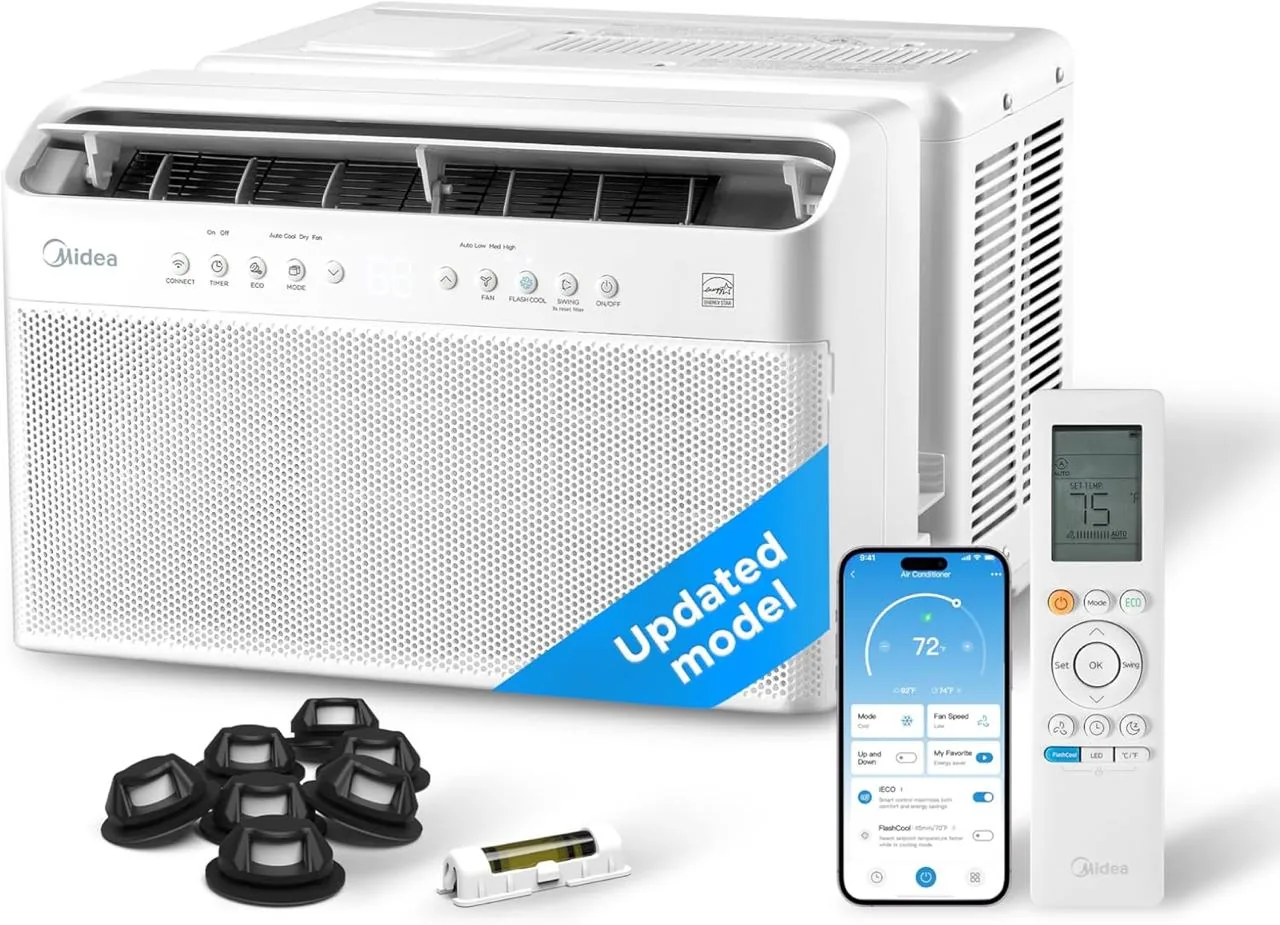
Midea 10,000 BTU U-Shaped Inverter Window AC
If you can fit a window unit, this is the upgrade Consumer Reports’ advice points to. The U shape lets the window close between the two halves.
Check price on AmazonFree: Home Energy Audit Checklist (PDF)
A two-page, room-by-room checklist for finding air leaks, standby power and heating and cooling waste yourself, in the order that pays back fastest. Get it now, plus new fix guides by email. Unsubscribe any time.
By signing up you agree to receive emails from EcoHome Intelligence. See our Privacy Policy.
Frequently Asked Questions
Do portable air conditioners use a lot of electricity?
More than window units of similar capacity. Consumer Reports found portables typically use more energy, partly because single-hose units pull warm outside air into the house.
How much does it cost to run a portable AC?
Multiply its wattage by hours per day, divide by 1,000 for kWh, then multiply by your price per kWh. A 1,000-watt unit running 8 hours a day uses about 240 kWh a month, which is about $44 at EIA's July 2026 average residential price of 18.31 cents per kWh.
Is a dual-hose portable AC more efficient?
Generally yes. A dual-hose unit takes some of its condenser air from outside, so it pulls less hot outdoor air into the room than a single-hose unit.
What temperature should I set my portable AC to?
ENERGY STAR suggests as high as is comfortable, typically 78°F. Adding a fan lets most people raise the setting by about 4°F.
Should I insulate the exhaust hose?
Keeping the hose short and free of kinks is what manufacturers recommend. Some people wrap it, but we found no independent data on how much that saves.
Related Guides
- How to lower your electric bill in summer — the bigger picture
- Window treatments and energy savings — which coverings work
- AC short cycling — for central systems
- Best home energy monitors — measure what it really uses
Sources
- Consumer Reports: Best portable air conditioners
- Consumer Reports: Are portable air conditioners a lot of hot air?
- Consumer Reports: Beat the heat with window coverings
- U.S. DOE: Portable AC test procedure final rule, 2016 (Federal Register)
- U.S. DOE: Portable AC energy conservation standards, 2020 (Federal Register, PDF)
- Appliance Standards Awareness Project: Portable air conditioners
- ENERGY STAR: Room air conditioners
- U.S. Department of Energy: Fans for cooling
- EIA: Electric Power Monthly, end-use prices
- Virginia Tech Extension: Appliance energy use
- NewAir portable AC manual (PDF)
