EcoGuide · Heating · Updated 2026-11-01 · 1,300 words
Best Smart Thermostat for Electric Baseboard Heaters
Our picks at a glance
Prices on Amazon change often. As an Amazon Associate we earn from qualifying purchases, at no extra cost to you.
The Short Answer
Electric baseboard heaters run on 120 or 240 volts through the thermostat itself, so they need a line-voltage smart thermostat. The Nest and ecobee models most people know are built for 24-volt central systems and will not work (more below).
| Pick | Best for | List price | Wiring |
|---|---|---|---|
| Mysa V2 Check price › | Most homes: touchscreen, energy and humidity readings | $159 | Neutral or second live wire (3 to 4 wires) |
| Mysa LITE Check price › | The same Mysa app and assistants for less | $99 | Neutral or second live wire (3 to 4 wires) |
| Meross Matter (MTS215) Check price › | Matter homes on a budget | $79.99 on Amazon (Nov 1) | Check the manual; not stated on the store page |
Product links go to Amazon; we may earn a commission at no extra cost to you.
Check your wiring before you buy. Mysa says its baseboard thermostats cannot operate on a single conductor (two-wire) setups. Turn the breaker off, take the old thermostat off the wall and count the wires in the box.
List prices from each maker’s US store. How we chose: manufacturer specifications, linked throughout. We do not test products in-house.
Side by Side
| Mysa V2 | Mysa LITE | Meross MTS215 | |
|---|---|---|---|
| Voltage | 120–240 VAC | 120–240 VAC | 120–240 VAC |
| Maximum load | 1,900 W at 120 V; 3,800 W at 240 V | 1,900 W at 120 V; 3,800 W at 240 V | Not stated on store page |
| Minimum load | 250 W | None | Not stated |
| Two-wire installs | — | — | Not stated |
| Alexa / Google / Apple Home | ✓ / ✓ / ✓ | ✓ / ✓ / ✓ | ✓ / ✓ / ✓ (Matter) |
| Energy monitoring | ✓ | — | ✓ |
| Humidity sensor | ✓ | — | — |
| Controls | Touchscreen | Buttons | See listing |
| Warranty | 5 years | 5 years | See Meross policy |
Sources: Mysa baseboard product page, Mysa V2 vs LITE, Meross MTS215MA.
1. Mysa V2: Best Overall
Mysa lists the V2 for electric baseboard, fan-forced convector, self-contained hydronic baseboard and radiant ceiling heaters, at up to 1,900 W at 120 VAC or 3,800 W at 240 VAC on a 20 A breaker. It works with Google Home, Amazon Alexa and Apple HomeKit, and Mysa says the V2 adds energy monitoring and a humidity sensor over the LITE. Mysa backs every thermostat with a 5-year warranty. Mysa has also released a Matter-certified Gen3 rated up to 4,000 W at 240 V, sold mainly through its own store.
Skip it if: the heater on that thermostat draws less than 250 W (the V2’s minimum load), or your box has only two wires.
We may earn a commission if you buy through these links, at no extra cost to you. Products are chosen on published specifications; we do not test them in-house (how we choose).
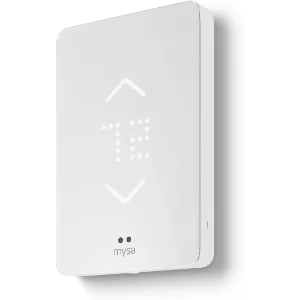
Mysa Smart Thermostat V2
Line voltage 120–240 V; up to 3,800 W at 240 V; energy monitoring and humidity sensor; Google, Alexa and Apple HomeKit; needs a neutral or second live wire.
Check price on Amazon2. Mysa LITE: Best Value
The LITE uses the same Mysa app and works with the same three assistants. Mysa describes it as a pared-down feature set: buttons instead of a touchscreen, and no energy monitoring or humidity sensor. Unlike the V2, it has no minimum load, which suits small heaters.
We may earn a commission if you buy through these links, at no extra cost to you. Products are chosen on published specifications; we do not test them in-house (how we choose).
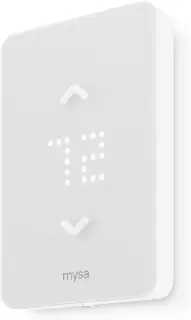
Mysa Smart Thermostat LITE
Same app, assistants and 5-year warranty as the V2 for less; buttons instead of a touchscreen; no energy monitoring; needs a neutral or second live wire.
Check price on Amazon3. Meross Matter Thermostat (MTS215): Best for Matter Homes
Meross lists it for high-line voltage (120 - 240 VAC) electric heating systems, such as baseboard, Convector, and Fan-Forced. Because it is Matter-based, it works with Apple Home, Siri, Amazon Alexa, Google Assistant, and SmartThings, and it has an energy monitor and open-window detection that pauses heating.
Before you buy: Meross’s store page does not state the maximum load or whether a neutral wire is needed. Check the manual against your heater’s wattage label and the wires in your box.
We may earn a commission if you buy through these links, at no extra cost to you. Products are chosen on published specifications; we do not test them in-house (how we choose).
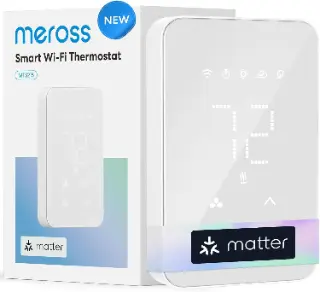
Meross Matter Smart Thermostat (MTS215)
Line voltage 120–240 V; Matter (Apple Home, Alexa, Google, SmartThings); energy monitoring; check load and wiring in the manual.
Check price on AmazonWhy Nest and ecobee Will Not Work
Both are built for 24-volt central systems. ecobee says high-voltage systems like electric baseboard heaters are not compatible, and Google says the same of high voltage systems, usually electric baseboard heating. Mysa also lists 24-volt furnaces, central air and heat pumps as not compatible with its baseboard models, so the two categories do not overlap. If your home has both, you need one of each type. For central systems, see ecobee vs Nest or the best under $100.
Before You Install
- Turn off the breaker for the heater circuit and confirm the power is off. Line-voltage wiring carries 120 or 240 volts. Hire an electrician where local code requires one.
- Count the wires. Mysa needs a neutral or a second live wire. Two-wire boxes are the most common reason a smart baseboard thermostat will not fit.
- Add up the heater wattage on that thermostat and compare it with the model’s maximum. Each thermostat controls its own heaters, so a house with five baseboard zones needs five thermostats.
- Check the heater type. Electric in-floor heating usually needs a floor-sensor model; Mysa sells a separate one for it.
What Does a Baseboard Heater Cost to Run?
Baseboard heat is electric resistance heat, so cost is simply watts × hours × your price per kWh. A 1,500-watt baseboard running flat out uses 1.5 kWh an hour; our heater cost calculator works for baseboards too. A smart thermostat cuts the hours: it lowers the temperature on a schedule and when nobody is home, room by room. Sinopé’s Wi-Fi TH1123WF (up to 3,000 W at 240 V, Alexa and Google) is another option, sold mainly in Canada.
Free: Home Energy Audit Checklist (PDF)
A two-page, room-by-room checklist for finding air leaks, standby power and heating and cooling waste yourself, in the order that pays back fastest. Get it now, plus new fix guides by email. Unsubscribe any time.
By signing up you agree to receive emails from EcoHome Intelligence. See our Privacy Policy.
Frequently Asked Questions
Can I use a Nest or ecobee thermostat with electric baseboard heaters?
No. Both are built for 24-volt central systems; ecobee and Google say high-voltage baseboard heating is not compatible. Use a line-voltage smart thermostat such as Mysa or Meross.
What is the best smart thermostat for baseboard heaters?
For most homes, the Mysa V2: 120 to 240 V, up to 3,800 W at 240 V, energy monitoring, and Google, Alexa and Apple HomeKit support. The Mysa LITE is the cheaper version without energy monitoring.
Do smart baseboard thermostats need a neutral wire?
Mysa's do: it needs a neutral or a second live wire and will not work on two-wire installs. Check the manual for other brands before buying.
How many smart thermostats do I need for baseboard heat?
One per zone: each line-voltage thermostat controls only the heaters wired to it, up to its maximum load.
Related Guides
- Best smart thermostat (2026) — all our picks by wiring and budget
- Heater cost calculator — works for baseboards
- Why is my electric bill so high in winter? — the usual causes
- Mini-splits for supplemental heat — cheaper heat than baseboards
- Ecobee vs Nest — for central systems
- Best smart thermostats that work with Alexa — for central heating and cooling
- Most energy-efficient space heater — for one cold room
