EcoGuide · Solar & Storage · Published 2026-11-15 · 1,300 words
Solar Pool Heater vs Solar Pool Cover: Which Actually Warms the Water?
Check today’s prices
Prices on Amazon change often. As an Amazon Associate we earn from qualifying purchases, at no extra cost to you.
The Short Answer
They do different jobs. A solar cover keeps heat in: the U.S. Department of Energy (DOE) says evaporation is “by far the largest source of energy loss” from a pool, and that covering a pool when it is not in use is “the single most effective means of reducing pool heating costs,” with savings of 50–70% (DOE). A solar pool heater adds heat: your pool pump pushes water through a collector in the sun and back to the pool (DOE).
- Buy the cover first. It is the cheapest step, it cuts the biggest loss, and DOE says it also reduces the collector area you need, lowers make-up water by 30–50% and chemical use by 35–60%.
- Add a collector if the water is still too cold, sized to DOE’s rule of 50–100% of the pool’s surface area.
- No product can promise a temperature. Results depend on sun, wind, air temperature, how many hours the pump runs and whether the pool is covered.
Guidance from DOE’s pool covers and solar pool heaters pages; product details from Intex, SolarPoolSupply and Pool360 (the trade catalog that lists the GAME heater), checked November 15, 2026. We compare published information and do not test products in-house (how we choose).
How Much Collector Do You Need?
DOE says the collector area should equal 50–100% of the pool’s surface area, more in cooler or cloudier places and for longer seasons, and less if you use a cover (DOE). A worked example for a 15-foot round above-ground pool:
- Surface area: 3.14 × 7.5 ft × 7.5 ft = about 177 sq ft.
- DOE range: 50–100% of that is about 88 to 177 sq ft of collector.
- One 4-by-8-foot SwimEasy panel has a 30 sq ft collector, so this pool would need roughly 3 to 6 panels to reach DOE’s range; one panel on its own covers about a sixth of the surface area.
For an in-ground pool DOE puts a full solar heating system at $2,500 to $4,000 installed, with a payback of 1 to 7 years depending on local fuel costs and sun (DOE). Small above-ground collectors like the GAME below cost far less but heat less.
Getting the Most From a Solar Cover
- Cover the pool whenever you are not swimming, especially overnight, when evaporation and heat loss continue without any sun to replace them.
- Expect a trade-off in the sun: DOE says a pool absorbs 75–85% of the solar energy striking it, a transparent bubble cover reduces that by 5–15% and an opaque cover by 20–40% (DOE). In dry or windy weather a bubble cover usually still helps during the day.
- Match the exact pool size so the cover sits flat edge to edge; gaps let warm, moist air escape.
1. Intex Solar Cover for 15-ft Round Pools: Start Here
Intex sells the 28013E solar cover for its 15-foot round pools, with sister models for 16-foot and 18-foot round and 18-by-9-foot rectangular pools (Intex). Intex says its air bubbles absorb and transfer the sun’s heat into the water and claims it reduces evaporation by 95% (Intex); that is Intex’s own figure. It is the cheapest of the three picks and tackles the largest heat loss.
We may earn a commission if you buy through these links, at no extra cost to you. Products are chosen on published specifications; we do not test them in-house (how we choose).
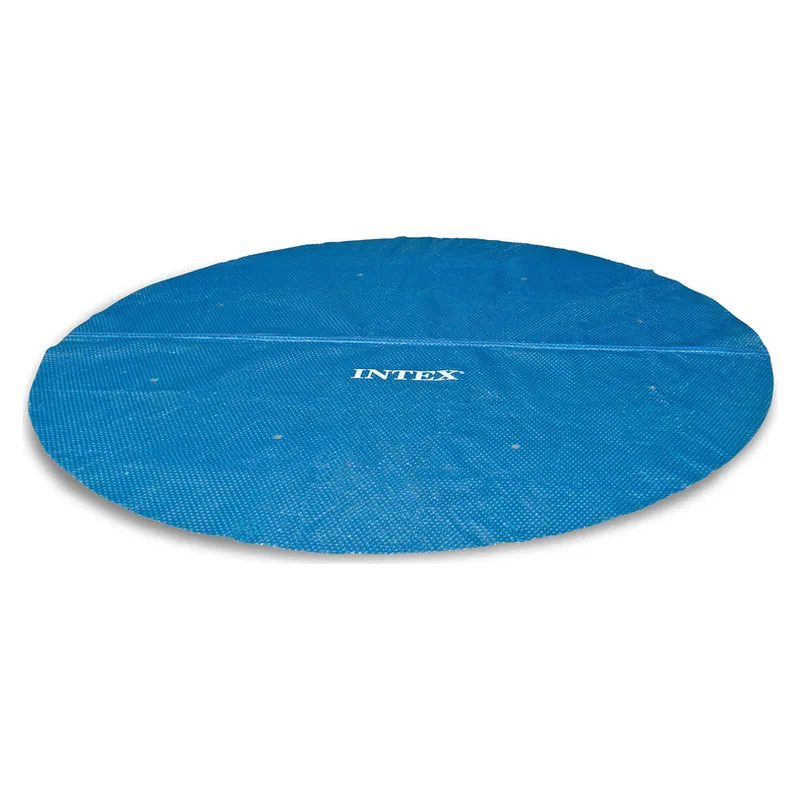
Intex Solar Pool Cover for 15-ft Round Pools (28013E)
Solar cover sized for Intex 15-ft round pools; Intex claims 95% less evaporation. $38.99 on Amazon on Nov 15, 2026.
Check price on Amazon2. SwimEasy 4 x 8 ft Panel: For In-Ground Systems
SolarPoolSupply’s SwimEasy is a single unglazed collector panel, 4 by 8 feet with a 30 sq ft collector and a 1.5-inch header, sold to replace or add to a roof- or rack-mounted pool heating system. The maker lists a recommended flow of 3.2 to 4.8 gallons per minute, SRCC Standard 100 and 400 and NSF/ANSI 50 listings, a 10-year limited warranty (five years full parts) and a 15–20 year life expectancy, which is its own claim (SolarPoolSupply).
Know before you buy: it is a bare panel with four rubber hose connectors; hose clamps, mounting brackets and the row plumbing are sold separately, and the header size must match your existing panels. It is the right buy if you already have a solar system or are building one with a pro, not a stand-alone heater.
We may earn a commission if you buy through these links, at no extra cost to you. Products are chosen on published specifications; we do not test them in-house (how we choose).
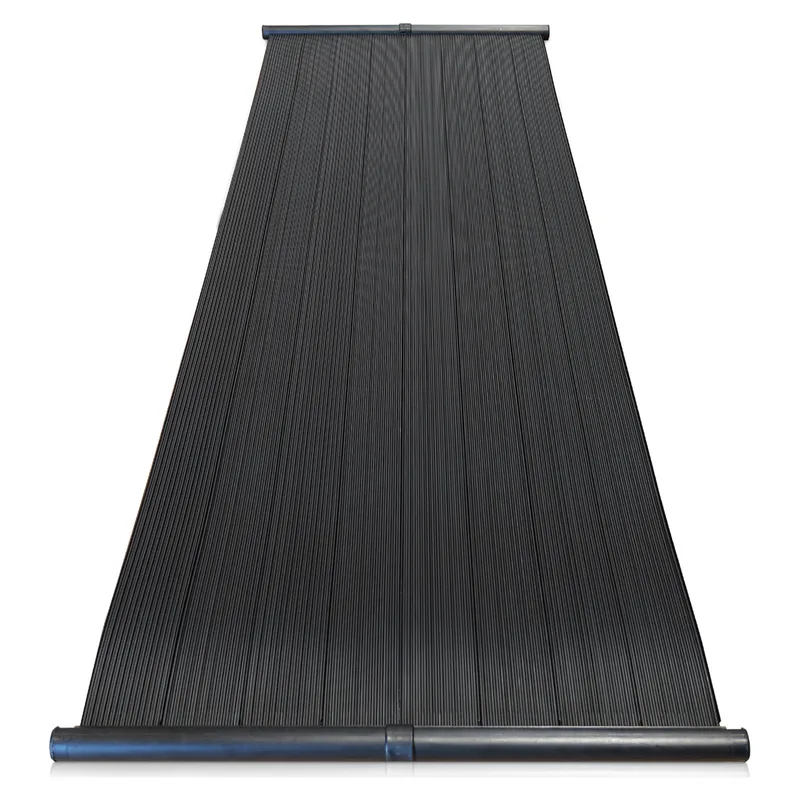
SwimEasy Universal Solar Pool Heater Panel (4 × 8 ft, 1.5-inch header)
30 sq ft unglazed collector; 3.2–4.8 gpm; SRCC 100/400 listed; 10-year limited warranty. $390.99 on Amazon on Nov 15, 2026, sold by SolarPoolSupply.
Check price on Amazon3. GAME SolarPRO Curve: Compact Collector for Small Pools
The SolarPRO Curve is a dome-shaped collector with a clear cover over a coil of 14 tubes, threaded ports for above-ground or in-ground pools and adapters for Intex pools. GAME’s catalog listing claims it suits pools up to 12,000 gallons and can raise an 8,000-gallon pool 5 degrees in five days, and gives a 1-year warranty (Pool360). That is the maker’s claim under its own conditions, not a guarantee.
Know before you buy: it is small, so treat it as a top-up for a small above-ground pool rather than a full heater. The trade catalog lists model 4721-01 as obsolete, but GAME’s own Amazon store had it in stock on November 15.
We may earn a commission if you buy through these links, at no extra cost to you. Products are chosen on published specifications; we do not test them in-house (how we choose).
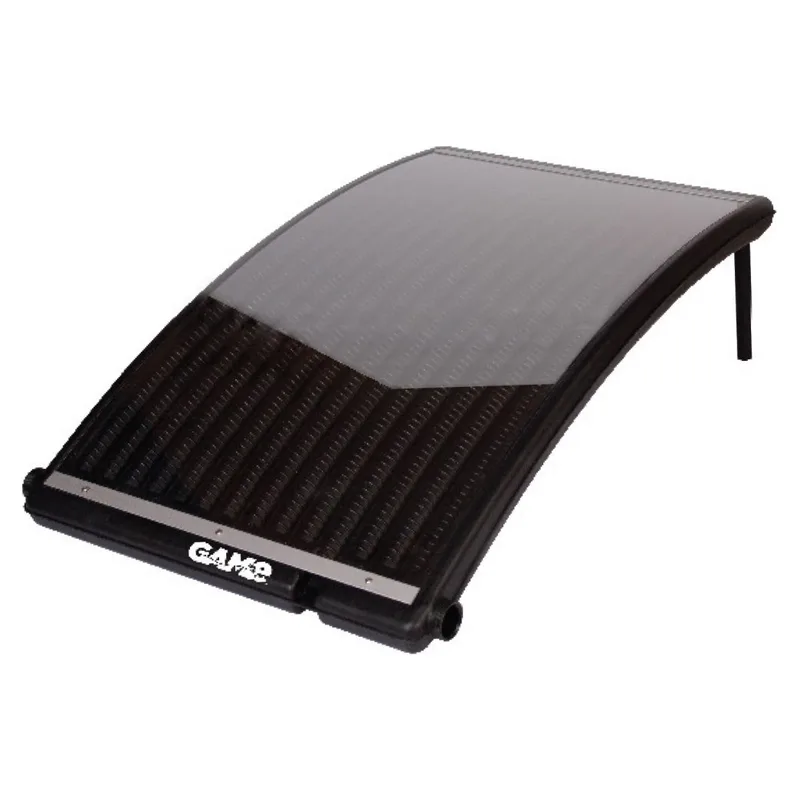
GAME SolarPRO Curve Solar Pool Heater (4721)
Curved collector with clear cover; Intex adapters included; maker claims up to 12,000 gal; 1-year warranty. $214.99 on Amazon on Nov 15, 2026.
Check price on AmazonFree: Home Energy Audit Checklist (PDF)
A two-page, room-by-room checklist for finding air leaks, standby power and heating and cooling waste yourself, in the order that pays back fastest. Free to download, no sign-up needed.
Download the checklist (PDF)Frequently Asked Questions
Do solar pool covers really work?
Yes. DOE says evaporation is the largest source of heat loss from a pool and that covering it when not in use is the single most effective way to cut pool heating costs, by 50-70%.
Is a solar pool heater or a solar cover better?
Start with a cover: it is cheaper and cuts the biggest loss. Add a solar collector if you need more heat; DOE says a cover also reduces the collector area you need.
How many solar panels does my pool need?
DOE says collector area should equal 50-100% of the pool surface area. A 15-ft round pool has about 177 sq ft of surface, so it needs roughly 88 to 177 sq ft of collector, or 3 to 6 panels of 30 sq ft each.
How much will a solar pool heater raise the temperature?
It depends on sun, wind, air temperature, pump run time, collector size and whether the pool is covered. Treat maker claims as best-case figures.
Should I leave a solar cover on during the day?
DOE says it depends on climate: in dry or windy conditions a transparent bubble cover is generally beneficial during the day, while in warm, humid weather you may do better without it in daylight.
Related Guides
- Small solar panel kits — solar electricity, not heat
- Attic radiant barrier — another sun-heat fix