EcoGuide · Insulation · Published 2026-11-15 · 1,500 words
Solar Attic Fans: When They Help and When They Waste Energy
Check today’s prices
Prices on Amazon change often. As an Amazon Associate we earn from qualifying purchases, at no extra cost to you.
The Short Answer
A solar attic fan uses a small solar panel to push hot air out of the attic on sunny days. It can lower attic temperatures, but the measured effect on your cooling bill is small. In a Florida Solar Energy Center (FSEC) study of a home with R-19 ceiling insulation, two solar attic fans cut peak attic air temperature by an average of 22°F, but air-conditioning use fell only about 6% (2.8 kWh a day), about 460 kWh or roughly $37 a year; at about $850 installed for the pair, that is a payback of more than twenty years. FSEC called the effect “fairly modest with well insulated attics” (FSEC).
- Fix these first: FSEC’s own list of better ways to limit attic heat is more attic insulation, a truss-mounted radiant barrier or a white reflective roof. See our attic insulation and radiant barrier guides.
- A fan can make sense in a hot climate, with an attic floor that is already air-sealed and insulated, enough soffit (intake) vents, and no gas appliances that vent through or sit in the attic.
- It can backfire when the ceiling leaks: an exhaust fan can pull cooled air from the house up into the attic, as building scientists warn (Energy Vanguard).
Figures on this page come from the FSEC study and the makers’ own pages, checked November 14–15, 2026. We compare published information and do not test products in-house (how we choose).
Why the Savings Are Small
Much of the heat that reaches your rooms from a hot attic is radiated and conducted down through the attic floor. A fan only moves attic air; it does nothing about the hot roof radiating onto the insulation, and good insulation already slows the heat that does get through. That is why FSEC found a large drop in attic air temperature but only a single-digit cut in air-conditioning use, in a test home that also had a radiant barrier. FSEC notes savings “may be larger” in homes without one, and that grid-powered attic fans typically do not save energy overall “unless the attic is uninsulated” because the fan’s own power use outweighs the savings (FSEC).
Solar fans avoid that power cost, which is their main advantage, but they still only pay back slowly.
When a Solar Attic Fan Backfires
An exhaust fan lowers the air pressure in the attic, and that air has to come from somewhere. If the soffit vents are blocked or too small, it comes through gaps in the ceiling: recessed lights, the attic hatch, plumbing and wiring holes. Building scientist Allison Bailes of Energy Vanguard puts it bluntly: “few ceilings are leak-free,” and pulling house air into the attic means you are effectively air-conditioning the attic. He also warns that a fan can backdraft a gas water heater, pulling exhaust gases into the house (Energy Vanguard).
- Air-seal the attic floor first. Seal the hatch, top plates, light fixtures and pipe holes. See sealing the attic hatch and what attic air sealing costs.
- Check the intake. Remington recommends about 4 sq ft of soffit (intake) venting per fan and says its fan works best with soffit vents (Remington Solar).
- Have gas appliances checked. If a furnace or water heater burns gas in or near the attic, ask a licensed HVAC pro to test for backdrafting before and after installing a fan.
- Use the thermostat. Both fans below come with one, so the fan runs only when the attic is hot. Amtrak says its thermostat helps avoid pulling warm air out in winter (Amtrak Solar).
The Two Fans Compared
| Amtrak Solar 50W Gable | Remington Solar 20W Roof-Mount | |
|---|---|---|
| Mounting | Behind a gable vent; separate panel on brackets | On the roof; panel built into the fan cap |
| Solar panel | 50 W | 20 W |
| Fan | 12-inch galvanized steel housing, 10-inch blade, 12 V, thermal-protected motor | Brushless DC motor, powder-coated steel |
| Controls | Thermostat included (Amtrak’s fan thermostat switches on above 85°F) | Thermostat and humidistat built in (on at 80°F or 75% humidity) |
| Maker coverage claim | Up to 2,250 sq ft | Up to 1,400 sq ft |
| Airflow (CFM) | Not published | Not published |
| Roof penetration | None (uses the gable vent) | Yes; Texas Windstorm Certified |
| Amazon, Nov 14, 2026 | $159.95 | $365.00 |
Neither maker publishes an airflow (CFM) figure, so the coverage numbers are the makers’ own claims and cannot be checked against a sizing rule. Specifications from Amtrak Solar, Amtrak’s thermostat page, Remington Solar and Remington’s attic fan range. Amazon prices checked by hand on November 14, 2026, each sold by the brand’s own Amazon store.
1. Amtrak Solar 50W Gable Fan: Best for Gable Vents
If your attic already has a gable vent, this fan mounts behind it, so there is no hole to cut in the roof. Amtrak Solar lists a 50-watt solar panel on angle brackets, a 12-inch galvanized steel housing with a 10-inch blade, a 12-volt thermal-protected motor and a free thermostat, for spaces up to 2,250 sq ft (Amtrak Solar). Amtrak’s solar attic fan thermostat switches the fan on when the attic rises above 85°F (Amtrak Solar).
Know before you buy: Amtrak does not publish an airflow figure or a warranty term on its product page. The separate panel needs a sunny spot and a cable run to the fan. The Amazon listing title says “Made in USA.”
We may earn a commission if you buy through these links, at no extra cost to you. Products are chosen on published specifications; we do not test them in-house (how we choose).
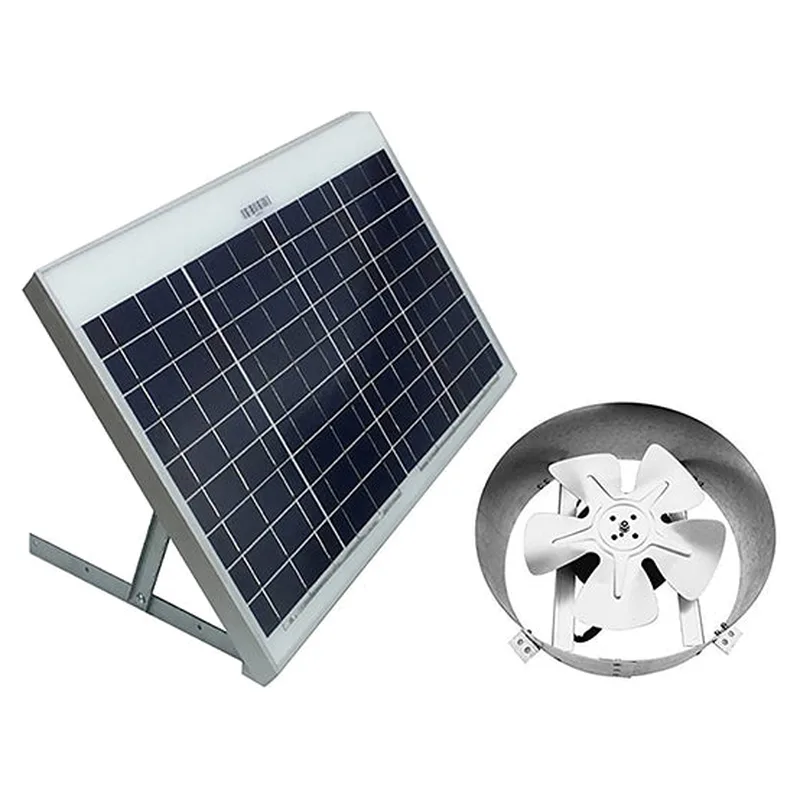
Amtrak Solar 50W 12-inch Gable Solar Attic Fan with Thermostat
Gable-vent mount; 50 W panel; 12-inch galvanized steel housing; thermostat included; maker says up to 2,250 sq ft. $159.95 on Amazon on Nov 14, 2026.
Check price on Amazon2. Remington Solar 20W Roof-Mount: Best Roof-Mount
For attics without a gable vent, Remington’s round 20-watt fan mounts on the roof with the solar panel built into its cap. Remington lists a brushless DC motor, powder-coated steel construction, a stainless steel animal screen, a built-in thermostat and humidistat that switch on at 80°F or 75% relative humidity, coverage for attics up to 1,400 sq ft and Texas Windstorm certification (Remington Solar).
Know before you buy: it means cutting a hole in the roof, so check your roof warranty and consider a roofer. Remington’s pages give different warranty terms for its 20-watt models, so confirm the warranty with Remington before you buy. At $365 it costs more than twice the Amtrak.
We may earn a commission if you buy through these links, at no extra cost to you. Products are chosen on published specifications; we do not test them in-house (how we choose).
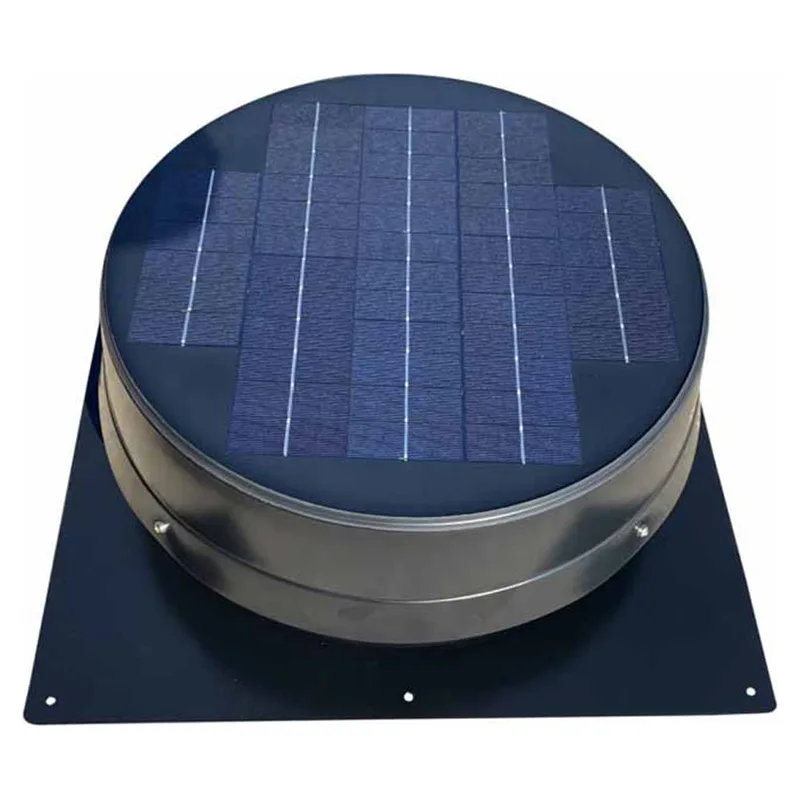
Remington Solar 20W Roof-Mount Solar Attic Fan (Round)
Roof mount; 20 W integrated panel; brushless DC motor; thermostat and humidistat built in; maker says up to 1,400 sq ft. $365.00 on Amazon on Nov 14, 2026.
Check price on AmazonFree: Home Energy Audit Checklist (PDF)
A two-page, room-by-room checklist for finding air leaks, standby power and heating and cooling waste yourself, in the order that pays back fastest. Free to download, no sign-up needed.
Download the checklist (PDF)Frequently Asked Questions
Do solar attic fans really save money?
A little. In a Florida Solar Energy Center study, two solar attic fans cut air-conditioning use by about 6%, about 460 kWh or roughly $37 a year, against about $850 installed: a payback of more than twenty years in a home with R-19 ceiling insulation.
Is a solar attic fan better than more insulation?
Usually not. FSEC lists more attic insulation, a radiant barrier and a white reflective roof as ways to limit attic heat gain. Insulation and air sealing help year-round; a fan only helps on hot, sunny days.
Can an attic fan pull air conditioning out of the house?
Yes, if the ceiling has leaks and the attic does not have enough intake vents. The fan lowers attic pressure and draws replacement air through gaps in the ceiling. Air-seal the attic floor and check soffit vents first.
Gable or roof-mount solar attic fan?
If your attic has a gable vent, a gable fan avoids cutting into the roof. A roof-mount fan suits attics without gable vents but needs a roof penetration and proper flashing.
Do solar attic fans work in winter?
Both fans here use a thermostat, so they run mainly when the attic is hot. Amtrak Solar says its thermostat helps avoid pulling warm air out in winter.
Related Guides
- Attic radiant barrier — often a better first step
- Attic insulation — check yours first
- Attic air sealing cost — seal before you ventilate
- Upstairs hotter than downstairs? — other fixes to try
Sources
- Florida Solar Energy Center: Performance Assessment of Photovoltaic Attic Ventilator Fans (Parker and Sherwin, 2000)
- Energy Vanguard: Power attic ventilators are a bad idea
- Amtrak Solar: 50W solar attic gable fan
- Amtrak Solar: solar attic fan thermostat
- Remington Solar: 20 watt solar attic fan
- Remington Solar: attic fans